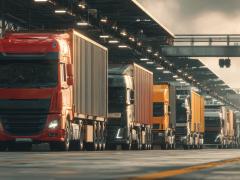
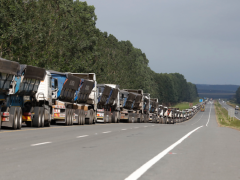
WITH R220m already spent this year on South Africa’s most important freight corridor – the N3 between Durban and Gauteng – rehabilitation is ongoing. “The N3 between Cedara and the Heidelberg South Interchange is our baby,” says Con Roux of N3 Toll Concession (N3TC). Since 1999 the company has been responsible for designing, constructing, operating and maintaining this stretch of N3. Roux says the N3 has experienced a massive increase in the amount of fuel transported by tankers to Johannesburg. While the N3TC derives its income solely from tolling, Roux recognises there are some goods that are more appropriate for other modes, and in this case, pipelines. These dangerous goods raise public safety and environmental concerns, which have motivated the formation of the N3 Tanker Forum. It was initiated by the N3 Incident Management team and met for the first time in June this year. “Big players in the industry all got together to highlight and discuss key areas and solutions for tankers travelling the N3.” An extra lane was opened up in December last year extending 1km on Van Reenen’s Pass following an engineering intervention to reduce incidents on that notorious stretch. “Rail is also a viable option for breakbulk cargoes,” believes Roux. As for general freight, an increase in extra-large, class four vehicles has led to increased continuous rehabilitation along the N3. “If we weren’t maintaining the road on a stringent ongoing basis, our road would shortly become another Eastern Cape.”
New forum addresses tanker issues on N3
Comments | 0
© Now Media. This content is protected by copyright and may not be adapted or republished. If you would like to discuss cooperation opportunities, please contact: editor@freightnews.co.za.