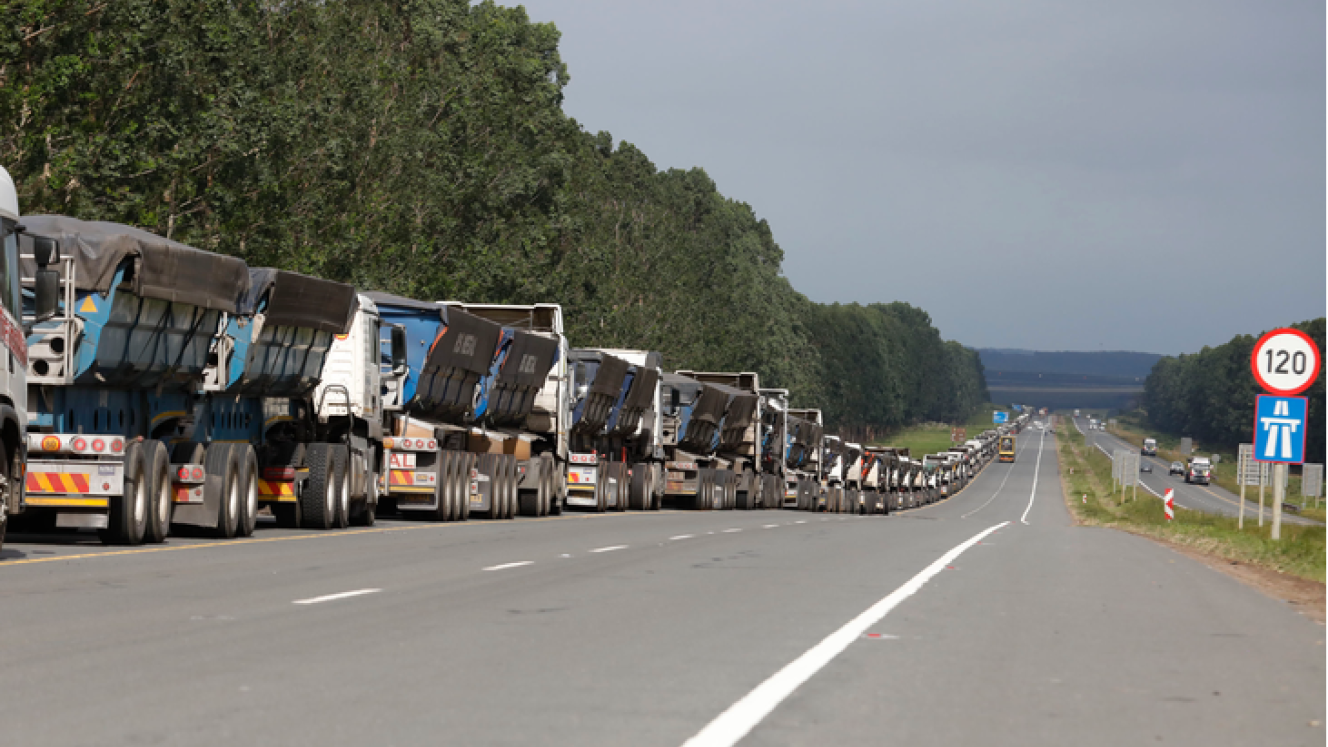
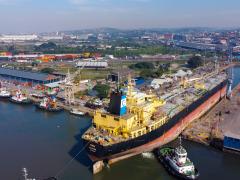
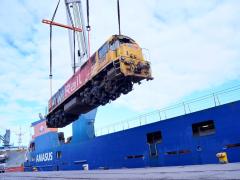
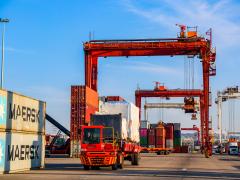
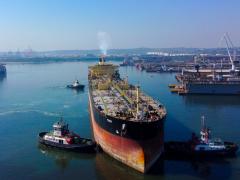
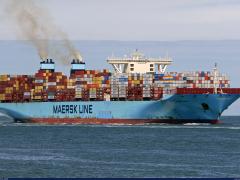
With just 2.1 million people in a country covering 825 000 square kilometres (of which 0.99% is arable), and limited water and power resources, Namibia has had to look beyond manufacturing and agriculture as economic drivers. Even the mineral wealth of the country – while bringing in foreign exchange – is not sustaining jobs. According to the CIA World Factbook, Namibia is the fourthlargest exporter of non-fuel minerals in Africa, the world's fifth-largest producer of uranium, and the producer of large quantities of lead, zinc, tin, silver, and tungsten, accounting for 8% of GDP but over 50% of foreign earnings. However, the mining sector employs only about 3% of the population, which means it does little to create and sustain jobs. What the country does have is 3 936 kilometres of border with Angola, Botswana, South Africa and Zambia, and 1 572 kilometres of coastline. And the once underdeveloped port of Walvis Bay. These natural strengths were packaged a little over ten years ago into a plan to turn Walvis Bay and Namibia as a whole into the western gateway for trade into the neighbouring countries and as far inland as the Democratic Republic of Congo. The opportunity was created by the congestion and lack of investment in the Angolan and Tanzanian ports. In 2000, the port of Walvis Bay was deepened to 12.8 metres to take larger vessels. Investment continues, with two new container quays due to be operational by 2012. Subsequently, congestion in Durban has added to the appeal of Walvis Bay, which is the closest efficient Southern African port for Europe and the Americas. Guided by its vision of being a gateway and “alternative port,” Namibia has focused investment on the port of Walvis Bay and four trade corridors – the Trans- Kalahari linking Walvis Bay to Gaborone in Botswana and Gauteng, Trans-Caprivi providing port access to Zambia, Zimbabwe and the Democratic Republic of Congo, the Trans-Cunene through northern Namibia into southern Angola, and the Trans-Oranje linking the port of Lüderitz with the Northern Cape. Millions have been invested in upgrading and maintaining the roads on these corridors, with a crucial bridge being built over the Zambezi river at Katima Mulilo in 2004 to open up a new transport route into the interior. Development of the corridors is being co-ordinated by the Walvis Bay Corridor Group, which was formed in 2000. It is responsible for marketing the corridors, facilitating inter-government meetings that have led to harmonised customs operations at the border posts, and the adoption of common protocols to speed up transit. There is still much to be done – trucks can spend weeks waiting for passage across the Angolan border, Walvis Bay is seeing the first signs of congestion, and there is the ever-present threat that once the Angolan ports start operating efficiently again, Namibia may lose its gateway status. What Namibia has in its favour is the commitment of the authorities to seeing a strategy like the corridors through, combined with a pool of skills needed to develop the logistics value-adding services needed at the port and along the corridors. According to the Factbook, 85% of Namibians can read and write, and services make up around 53.4% of Gross Domestic Product.
Namibia – commitment pays off
Comments | 0
© Now Media. This content is protected by copyright and may not be adapted or republished. If you would like to discuss cooperation opportunities, please contact: editor@freightnews.co.za.