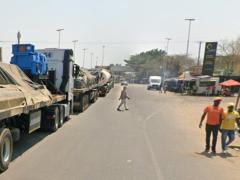
Leonard Neill CROSS COUNTRY Containers’ central quotation call centre in Durban has revealed that up to 45% of its enquiries are for road transport quotations, an amazing turnabout for a company which was traditionally rail-based. “In the past, on average 5% of our calls were road transport-related,” says director Richard Foulds. “But such is the state of inefficient rail operations these days, that many of our clients ask for quotations to send consignments by road without mentioning rail alternatives.” Foulds’ comments echo the sentiments of many forwarders who are switching from rail to road because of insufficient rolling stock. In many instances the road transport service is not entirely to their satisfaction, but they see no other means of getting goods to harbours for export purposes without lengthy rail delays. Some fruit producers in the Letaba region of Limpopo province, for example, use whatever road transportation is available for the long journeys to Durban and Port Elizabeth, often employing one-man one-truck operators to meet their orders, and often finding these inadequate for their reefer requirements. “If you have a truck these days you can get orders from anywhere,” says Andre Fourie, general manager of Amalgamated Transport Services, a dedicated trucking company. Fourie sees a marked swing away from rail in recent times. “The heavy demand for maize in countries to the north of us has shown this to be a fact,” he says. “We are loading huge quantities of it.” All of this conflicts with the statement made by Transport Minister Dullah Omar shortly after he assumed office, that he would work towards what he termed a levelling of the playing fields between road and rail. But it was a comment easier said than achieved, for Omar was inheriting a department which included the beleaguered Spoornet with its shortages of equipment and rolling stock.
'Most customers have ceased even asking for rail quotations'
Comments | 0