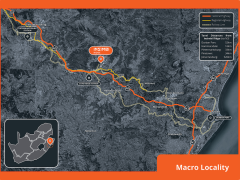
Secrecy and evasive tactics continue to impugn the legality of leases Transnet awarded to three companies purportedly aiming to extend liquid bulk storage capacity beyond the Port of Durban in an adjoining area called Ambrose Park. Whereas the parastatal was initially only prepared to say that the leases awarded back in 2017 were the subject of a “forensic process”, it recently revealed that the three companies that had received the leases were Main Street 123, Lanele Group, and NOOA Petroleum. It also identified a fourth recipient, Icon Star, but added that “even though the application was also approved, the lease agreement had not been finalised”. In the meantime FTW can reveal that at least two of the companies – Main Street 123 and Icon Star – are virtually impossible to
locate let alone contact. And although NOOA Petroleum has a web presence, all attempts to reach its CEO, Londi Hlela, or any of his senior associates have proved futile. Of the four companies in question only Lanele Group answered calls for comment as to wide-spread industry accusations that the leases were illegally awarded. But the company’s project coordinator, Nomusa Mbokazi, said that Lanele MD Lwazi Mtshali was attending the African Mining Indaba in Cape Town and was therefore unreachable. Several emails sent to Lanele, and it was confirmed that they had been received, also went unanswered. In the meantime, as Transnet self-investigates ahead of its date in front of the Zondo Commission of Inquiry into Allegations of State Capture, all plans for Ambrose Park appear to be on hold.
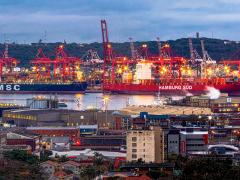
In FTW’s January 18 edition (#2327) it was reported that not only had the leases been awarded to “unknown” entities, but that the current Island View Precinct facility was only 50% used. Outgoing Freightliner CEO Kevin Martin said that Durban Port Committee had confirmed that Island View had enough capacity to store bulk liquid until 2030. “So why on earth would you allow unknown companies to build extra tanks in an area that will only add to the current congestion issues we have around Bayhead and Langeberg Roads – the only access ways to container terminals one and two." According to Martin,
when objections were raised by companies and port interests other than his own about the manner in which the Environmental Impact Assessments (EIA) and traffic plans had been conducted, these were overruled at provincial level. More importantly, questions have been asked about how a key point service such as the storage of bulk liquid at Island View can be extended beyond the port’s demarcated area. With regard to complaints that the impact assessment and traffic plans by the three recipients of the leases were improperly conducted, Transnet said that “the responsibility to conduct EIAs lies with the tenants.
“This is in line with the development lease agreement which places the onus on the tenants to obtain all the required approvals from the relevant authorities” – the same people who ignored their objections, Martin claimed. He added that Transnet could also not “just wash its hands and walk away” from an area that was crucial for the effective flow of freight in and out of Durban. In a worst case scenario, if ever heavy infrastructural development proceeds at Ambrose Park, fears are that it could mean certain oversize cargo might have to be sent north to Richards Bay. Apart from the logistically cumbersome, time-consuming and excessively costly exercise of rerouting engineering machinery, the CEO of the South African Association of Ship Operators and Agents, Peter Besnard, has warned that Richards Bay doesn’t have the right crane capacity for certain heavy haul loads.
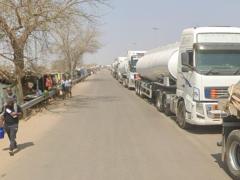
IMAGE WITH CAPTION:
Transnet cannot just wash its hands and walk away from an area that is crucial for the effective flow of freight. – Kevin Martin