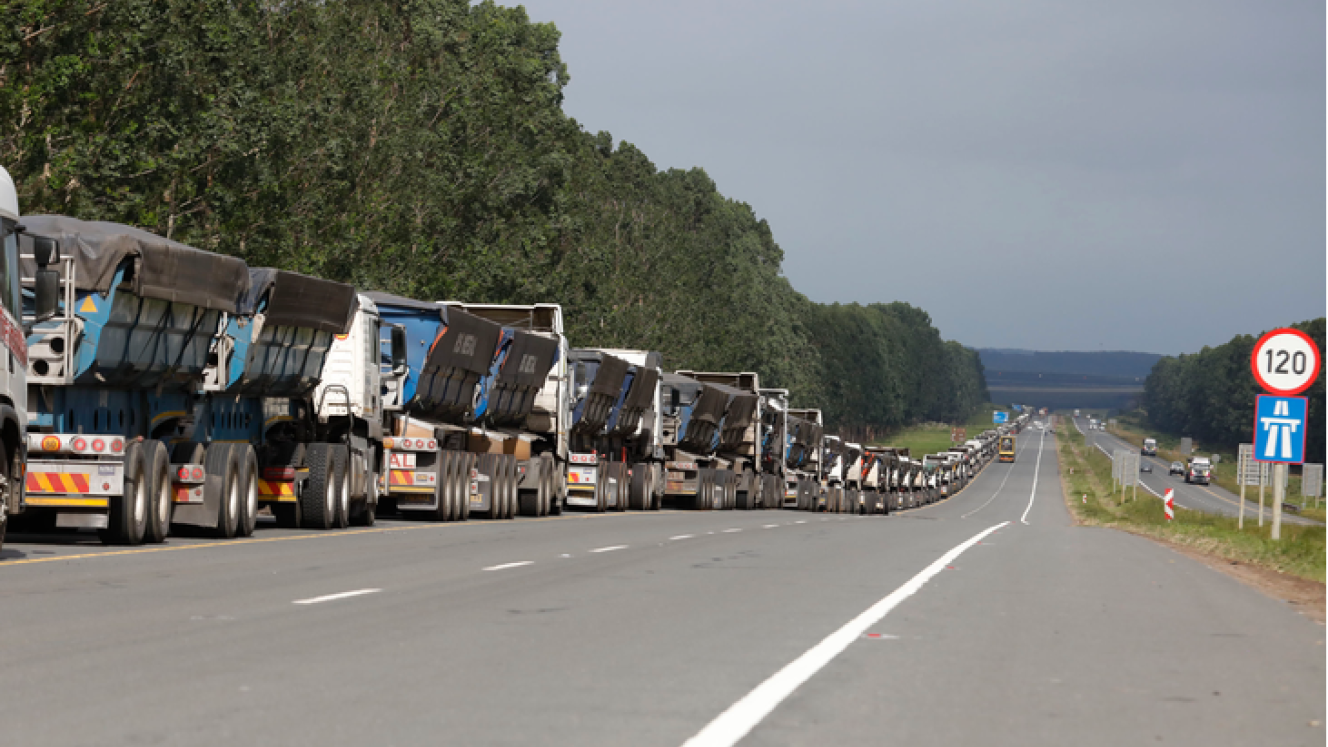
WHILE DIESEL is recognised as an efficient fuel in the transport sector, academics have called for a swing from fossil-fuel dependency to a combination of alternative fuel sources and better energy management to ease oil dependency in the industry. “It is a generally accepted fact that the average growth in annual oil demand is 2%, while there is an estimated 3% natural decline in production,” Dr Marianne Vanderschuren from the Centre for Transport Studies at the University of Cape Town told FTW last week. “Sure diesel is more efficient now, but what happens when there is no more oil? “Everyone is pinning their hopes on bio-fuels, but based on our research, bio-fuels can only displace 7% of the current energy needs,” says Vanderschuren. “On the other hand, we estimate that South Africa currently wastes 5% of its Liquefied Petroleum Gas (LPG).” The South African transport industry is responsible for 27% of energy demand, while road transport consumes 8 4% of transport energy demand. “Almost 80% of the demand is met through imported crude oil,” says Vanderschuren . “If you could remove ‘aggressive driving’ and lower the national speed limits, and incorporate in-car navigation systems, we estimate a 15% saving on fuel consumption,” believes Vanderschuren. “Vehicle maintenance can reduce costs up to 12%. “In the short term, there should be a move towards diesel, but an alternative fuel is needed for the future. The government needs to act now to facilitate a modal shift to reduce inefficient consumption practices.”
Modal shift needed to address energy crisis
Comments | 0
© Now Media. This content is protected by copyright and may not be adapted or republished. If you would like to discuss cooperation opportunities, please contact: editor@freightnews.co.za.