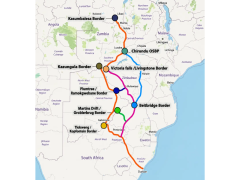
Recent developments at Beitbridge and other regional corridors once again showed how exposed cross- border operators can be when policy changes without warning. When Zimbabwe halted the export of certain raw minerals, trucks were suddenly stationary. Cargo could not move. Transporters waited for instructions. Clearing agents fielded calls from clients while trying to determine what the actual position was. From the outside, it looked like a traffic problem. On the ground, it was something else entirely. “When policy changes overnight, it’s not just cargo that gets stuck,” said Ridwaan Mohammed, general manager at Clearight (ACS). “It’s contracts, cash flow and relationships. The financial pressure starts almost immediately.” Cross-border trade in southern Africa operates within a complex regulatory environment. Sudden shifts, inconsistent communication and changing documentation requirements are part of the landscape. The physical queue at the border is often only the final stage of a problem that started much earlier. In many cases, delays are compounded because operators do not have clear visibility of their exposure. Which loads are affected? What tariff positions apply? What declarations have already been lodged? What compliance risks exist if the regulatory position changes? “The real challenge isn’t avoiding change,” said Mohammed. “It’s how quickly you can understand what it means for your shipments and make informed decisions before losses escalate.” This, he said, was where systems maturity became critical. “Cross-border efficiency is no longer only about transport planning. It depends heavily on accurate declarations, structured data, proper tariff classification and strong validation before submission. When compliance systems are weak, the margin for error narrows dramatically during volatile periods. No software can prevent a political decision. But robust systems can help operators assess impact faster, reduce avoidable rejections and reroute or restructure shipments with greater confidence.” According to Mohammed, there is a growing recognition in the region that compliance and data visibility are not administrative back-office functions. They are central to operational resilience. Looking ahead, he said cross-border trade would likely remain volatile. Regulatory changes, currency pressures and corridor congestion were unlikely to disappear. “The businesses that manage this environment successfully will be those that treat compliance infrastructure as part of their strategic planning and not as an afterthought,” he told Freight News. “In cross-border logistics, you’re not just moving cargo. You are navigating a regulatory environment that can shift at any time. The operators who build resilience into their systems will be the ones who stay competitive.” LV
Managing risk when policy shifts overnight
Comments | 0
© Now Media. This content is protected by copyright and may not be adapted or republished. If you would like to discuss cooperation opportunities, please contact: editor@freightnews.co.za.