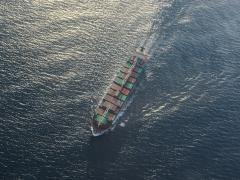
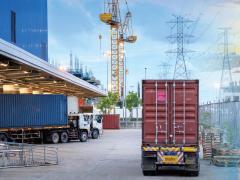
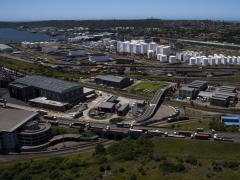
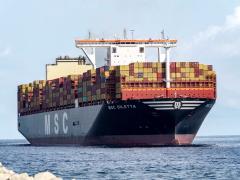
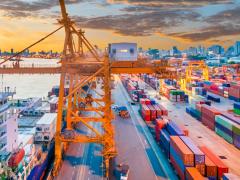
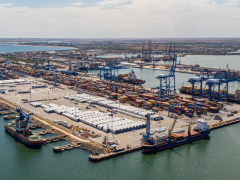
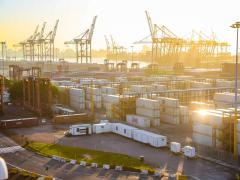
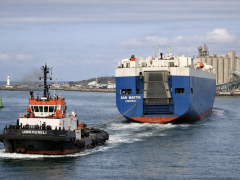
A host of problems blighting the new Navis port management system, its operators, and other handling personnel at the Pier 2 container terminal (DCT) three weeks ago turned the container port of Durban into a disaster zone for 10 days. And the problem, although “a little better”, was still prevalent last week, according to Paul Rayner, MD of short-haul container truckers, DTB Cartage. “It’s still not entirely satisfactory, and there are still lengthy delays,” he told FTW. He also noted that the bad situation had been made worse by the public holidays, where – although the terminal works 24/7 – industry and container depots closed down. Rayner suggested that measures taken this week would better judge whether the worst of the problem was over. But the height of the computer failure was an exceptionally bad time for the container transport sector in all its forms. Ships, trucks and trains suffered from lengthy delays, and the whole freight industry lost millions as import and export containers got jammed up at the terminal. From the truckers’ point of view, Kevin Martin, MD of Freightliner and current chairman of the Durban Harbour Carriers’ Association, told FTW at the time: “The first two weeks of the Navis system, small improvements were seen. Last week (week three) was a huge step backwards with delays of up to 24 hours to turn one truck around, with 12 to18 hours being the norm. “These extended delays could not be put down purely to Navis, but rather point to a staff backlash of some sort. As I have been led to believe that staff bonuses are based on performance levels, if Navis is not allowing the staff to perform – and thus affecting their pockets – there may be some truth in the rumours, so we will just have to wait and see what develops.” In his letter to Saaff members, Martin pointed out that the spectacle of disaster was not unforeseen. “In general, when a changeover of this magnitude takes place – anywhere in the world – even with the best of planning and trial tests, under full operational conditions, the wheels tend to come off. The change to Navis is not the exception to the rule – unfortunately. “....it is “normal” for a lead time of between eight to twelve weeks before the system ‘beds in’ and some resemblance of normality returns.” He did, however, describe the situation as “unacceptable”. Rayner was simple in his description of the situation. “Disaster,” he said. “Truck queues have never been worse in the whole history of containerisation in Durban. Delays going into days, not hours. “At the A-check, for example, it’s a complete shambles. On a 24-hour basis, the trucks were being based in 25 lines for one terminal – and probably about 10-12 trucks in each line. That’s every day, 24 hours a day.” Ships were also delayed, with some vessels being diverted to other ports – which, in turn, also placed a strain on planning, as containers then had to be relocated between centres using the problematic rail standard operating procedures (SOP). “Big problems,” said Glen Delve, marketing director of shipping line, MSC. “We’re having about a sixday berthing delay, and not getting export boxes into the stacks on time. It’s also a huge problem on the import side, as boxes are not getting cleared.
Major delays as Navis fails
Comments | 0
© Now Media. This content is protected by copyright and may not be adapted or republished. If you would like to discuss cooperation opportunities, please contact: editor@freightnews.co.za.