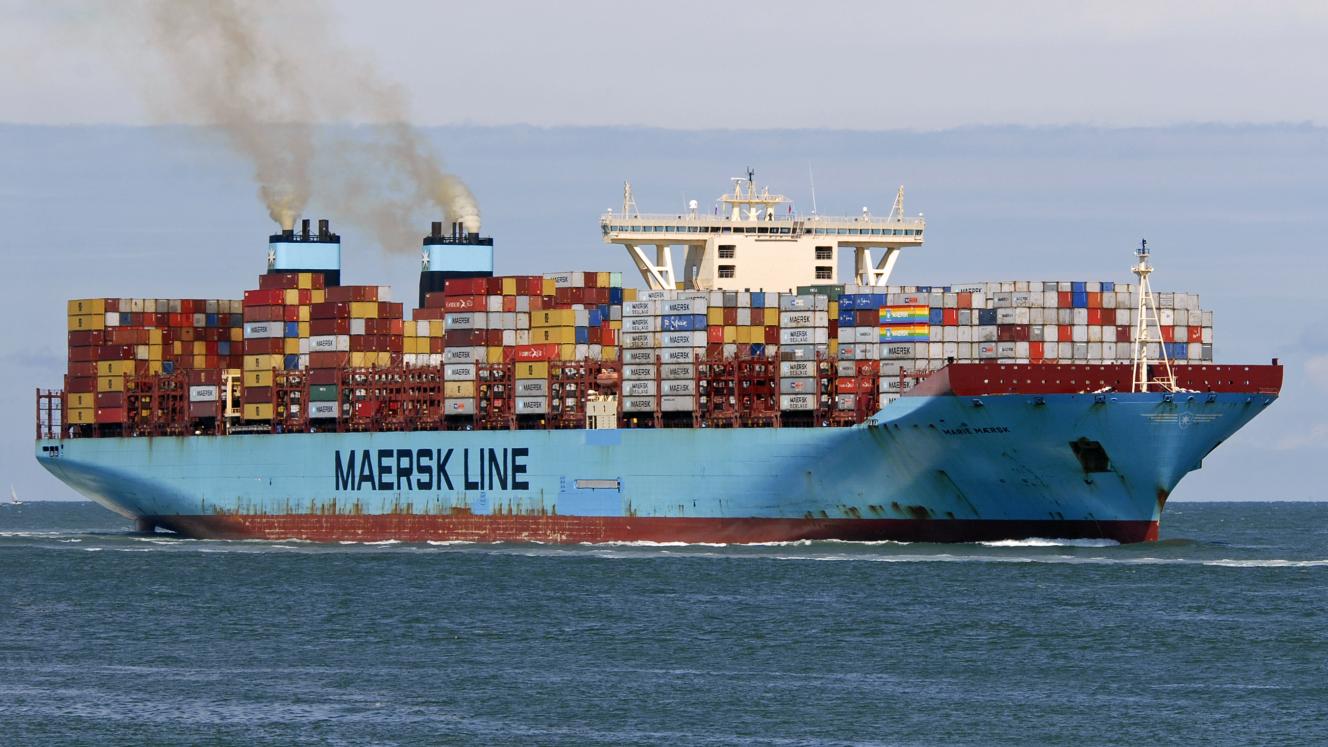
The Maersk Group is on track
to meet its ambitious target
of reducing its global CO2
emissions by 60% at the end of
this decade. This would mean
that around 200 million tonnes
of carbon emissions generated
by ocean carriers would
potentially have been avoided
by 2020
Safmarine Southern Africa
MD, Dirk Hoffmann, told
FTW that the Maersk Group –
which includes its network of
container shipping operations
(including Safmarine) and
terminal operations – has
already achieved a 40%
reduction in its CO2 emissions,
having achieved an 8%
reduction in 2014 alone.
With 90% of internationally
traded goods being moved by
sea, the seafreight industry
plays a major role in facilitating
trade and creating economic
growth opportunities, said
Hoffmann. “We therefore
set the target to not only cut
down dramatically on the
environmental impact but
to ensure that we operate
responsibly to guarantee a
sustainable business.”
Hoffmann pointed out
that container shipping
was the most energy
efficient means to move
high volumes of goods
across long distances.
He used the
example
of transporting one pair
of running shoes between
Hong Kong and Rotterdam
via oceanfreight (a distance
of nearly 20 000 km) versus
transporting the same cargo
20km from a local store to a
residence.
“The sea journey for one pair
of shoes would generate 100
grams of CO2, whereas the
journey from the store to home
in a land-based vehicle would
potentially generate 1 800
grams of CO2,” he said.
Yet, says Hoffmann, given
the volumes transported on
an annual basis, the impact
is significant. “Furthermore,
total volumes transported by
sea are expected to increase by
up to 80% over the next five
years,” he said. In 2014, Maersk
liner business generated 27.3
million tonnes of CO2 gases.
Hoffman said that by
implementing several new
design and operational
strategies, including slowsteaming,
Safmarine
had managed to save
20% more on
C02 emissions
in 2014,
compared
to an
industry
average
carrier.
“Last year, the
industry average was 1 346 630
tonnes of CO2 emissions, while
Safmarine emitted 1 076 468
tonnes. We managed to save
our customers 270 155 tonnes
of CO2 emissions,” Hoffmann
pointed out.
He noted that while slow
steaming added five or
six days to the average sea
journey, it halved the total
volume of emissions. “We
haven’t had any industry
outcry around this as our
customers can see the
business value of reducing gas
emissions. Plus, by employing
slow steaming, we are able
to more accurately meet our
allocated berthing time
slots,” said Hoffmann.
The Maersk Group’s new,
larger container vessels –
such as its Triple-E series
– have set new standards in
energy efficiency which has
been a major boost to the
CO2 reduction target, said
Hoffmann. “Furthermore,
our existing fleet is being
retrofitted with new
technologies.” He said that
R1bn had been set aside to
retrofit 100 ships over the
next five years.
Maersk Group on track with ambitious CO2 reduction plan
Comments | 0
© Now Media. This content is protected by copyright and may not be adapted or republished. If you would like to discuss cooperation opportunities, please contact: editor@freightnews.co.za.