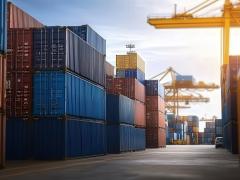
Too much space for too few containers, but shipping line execs told FTW that they were on the blocks ready for a fast start in the chase for supply/demand balance. The latest global container fleet statistics indicate that this will be the story at the end of this year and into next. It should also see freight rates getting a hammering; lines just recovering from the tough times of the recession falling back into the mire of despondency; and shippers dancing off happily with lower shipping bills. But maybe we shouldn’t paint such a grim picture of ragged shipowners being dragged off to the poorhouse, according to David Williams, MD of Maersk Line in SA. He does acknowledge that the latest figures show that shipping lines are going to have too many ships by the year end for the cargo volumes that are likely to be on the market then. “Just look at the latest AXS Alphaliner market analysis and you’ll see that overcapacity’s pretty obvious,” he told FTW. “But the lines have learnt from the economic recession, and will idle up their ships more quickly than previously.” Before taking vessels out of service, the first step nowadays is increasing extra-slow steaming (ESS) programmes, according to AXS Alphaliner. By sailing at a slower speed, carriers are able to burn less fuel and absorb excess capacity, as more ships are needed to maintain the frequency of schedules. This, it added, had resulted from rising fuel prices and a surplus of vessel capacity. With the cost of fuel rising to US$500 a tonne, it said the additional capacity absorbed by carriers implementing ESS had increased to 625 000-TEUs, or 4.4% of the containership fleet at the beginning of November. And, if all the other container services that operated on the deepsea trades were to adopt ESS, it would absorb an extra 350 000-TEUs. But, a recent report in Lloyd’s List suggested that 5% of the active containership fleet must be removed if carriers want to increase rates. And this is where Iain McIntosh, trade and marketing director of Mitsui OSK Line (MOL), agrees with Williams on the idle fleet increase. “There’s an upturn in people laying off ships already,” he said. “Consortiums of lines are already getting vessels on scheduled sailings out of loops.” And it’s quite a lot of the larger vessels (upward of the 5 000-TEU mark) which are now anchoring off. “So,” said McIntosh, “the total will accelerate from here as more big ships go down.” He sees big, bold figures in his crystal ball. “The idle fleet will probably go well over a million again this year/ next,” he told FTW.
Lines get ready to reduce fleet as supply exceeds demand
Comments | 0
© Now Media. This content is protected by copyright and may not be adapted or republished. If you would like to discuss cooperation opportunities, please contact: editor@freightnews.co.za.