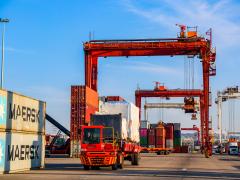
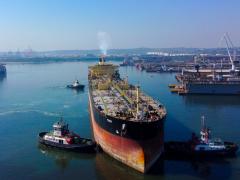
A significant increase in windrelated delays at the Port of Cape Town has forced shipping lines to take difficult – and often costly – decisions, but there’s often no alternative to bypassing the port in order to maintain schedule integrity. “Transhipping Cape Town cargo at Ngqura for return to Cape Town has cost implications for a carrier,” says Brad Gower, marketing and commercial director for MSC in the Cape region. “We don’t take this decision lightly because we know it can have an impact on our clients’ logistics chains – but at times we are left with no alternative on some of our southbound voyages.” According to Gower, there have been more wind delays in October through to February than the previous season. “For example, in October 2012 we lost 233 hours’ production due to wind versus 54 hours in October 2011. In January this year we lost 272 hours versus 142 hours in 2012. The wind delays are exacerbated with rubbertyre gantries (RTGs) shutting down at lower wind speeds than the quay gantries. We would like to see the RTGs working at the same wind speeds as the gantry cranes.” Port authorities shut down the quay gantries at winds of around 80km per hour, but the RTGs in the stack are brought to a halt even sooner at winds of 70km per hour. “At the height of the wind delays we had to employ an additional feeder to move cargo between Ngqura and Cape Town which was an extremely costly exercise, but if the port is wind-bound there is nothing much else we can do. The perishable industry is particularly sensitive to delays, and we are obliged to call Cape Town on our northbound voyages. The speeding up of vessels to make up lost time is also a costly exercise.” Gower believes that finding a longer-term solution to the wind problem is crucial, although wind is only part of the equation. “When the Port of Cape Town works, it works well, but when it closes down the recovery time is not at its optimum. The port has six gantries but cannot always maximise this equipment as it does not have sufficient labour to deploy in order to operate all six gantries at all times. When we are recovering from wind delays it’s important for the port to offer a full recovery programme to its clients by utilising its equipment at its optimum. A lack of stack capacity is another concern.” CAPTION The MSC Lisbon calls at the Port of Cape Town.
Lines count cost of increase in wind-related delays
Comments | 0
© Now Media. This content is protected by copyright and may not be adapted or republished. If you would like to discuss cooperation opportunities, please contact: editor@freightnews.co.za.