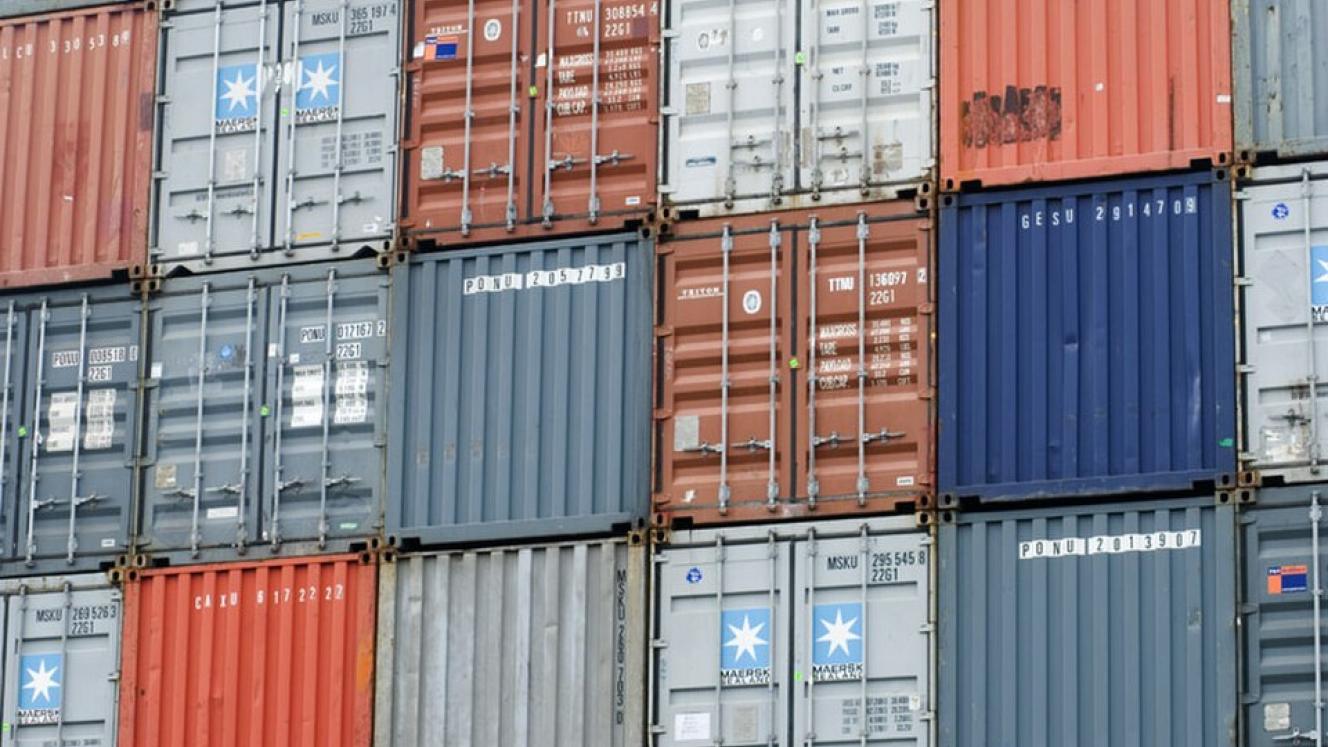
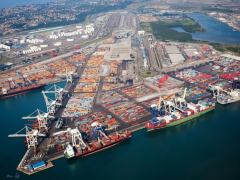
As the Port of Durban begins to show signs of serious berthing delays, questions have been raised about the likelihood of a congestion surcharge being raised by the shipping lines. And with the loss of one berth for the next three years as the Durban container terminal (DCT) undergoes a massive upgrade – resulting in an estimated 400 000-TEUs-ayear overflow – the issue has moved up the shipping agenda. For the first time FTW has been provided with a congestion model that offers some clarity on the lines’ thinking. Maersk Line told us that the DCT upgrade was expected to cost the loss of one berth for the next two to three years. “Because of this,” the line added, “terminal productivity will be negatively impacted, which could lead to delays in release of cargo and vessel arrival/departure. This will not only be a concern for Maersk Line but for the industry as a whole.” Given this concern, Maersk Line has proactively shared with FTW and its readers what the trigger points are that would result in it introducing a congestion surcharge. However the line warned worried readers: “This is NOT indicating an imminent implementation of a congestion surcharge.” Should the delays result in a consistent berthing delay of at least 48 hours over a four-week period, the line said, it will introduce a congestion surcharge. “This,” the communication added, “will assist in recovering some of the extraordinary costs that will be incurred as a consequence of speeding up our vessels in order to recover schedule integrity at the subsequent ports. “We are aware of the impact the delays will have on our customers and we will do all we can with various stakeholders to minimise the impact. However, in order to sustain viable services, we will potentially implement a congestion surcharge for imports and exports out of Durban.” The line’s calculation seeks to define the cost amount (quantum) that will trigger the implementation of the congestion surcharge. This quantum, the line indicated, will range anywhere from US$65 per forty-foot equivalent (FFE) for a 2-day vessel delay, to US$286/FFE for a 7-day vessel delay. It has been calculated based on the following equation: Quantum = *Incremental bunker spend FFE *Calculation based on weighted average of the three largest services and then used as overall figures for Durban “This calculation does not include any costs for extra vessels,” said Maersk. “If these are required then the calculation will need to be revised and we will communicate this to all customers.” If implemented, the surcharge will be applicable to all containers loaded and discharged in Durban, although transhipment cargo will be exempt from this surcharge. With regard to import containers, any container “gated in” at foreign origins destined for Durban will incur this charge effective 00h00 on the effective date. With regard to export containers, the charge will become effective on any containers “gated in” at Durban from 00h00 on the effective date. The congestion surcharge will be for the account of the freight payer. Said Maersk: “We will continue to monitor the delays and work with all stakeholders in order to minimise the impact.” INSERT The line’s calculation seeks to define the cost amount that will trigger the implementation of the congestion surcharge.
Line spells out its congestion surcharge tipping point formula
Comments | 0
© Now Media. This content is protected by copyright and may not be adapted or republished. If you would like to discuss cooperation opportunities, please contact: editor@freightnews.co.za.