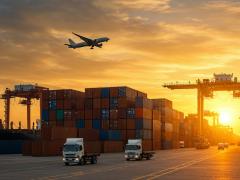
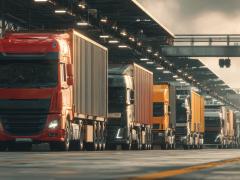
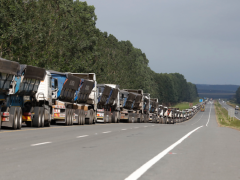
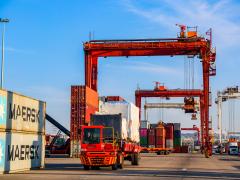
AS SOUTH Africa’s port infrastructure creaks under the pressure of growing volumes and environmental impact assessments and changeable government policies continue to delay critical upgrades, there are valuable lessons to be learned from China. “Chinese ports are gold standard,” says Maersk Line’s director commercial management in Hong Kong, David Zimmermann. “There’s an acknowledgement that infrastructure is critical to China’s growth and while the country’s ports are currently highly efficient, authorities recognise that they will have to increase capacity to keep up with the tremendous growth,” Zimmermann told FTW in Hong Kong recently. “They are able to direct the resources efficiently and effectively. They don’t have a lot of the restrictions that other countries around the world have and if they want to build they build quickly.” In his view all of the gateways up and down the coast for south, east and north China have plenty of capacity for current volumes but are anticipating huge growth. For south China throughput is predicted to rise by 12% a year for the next seven years while Mainland China is aiming to increase its port capacity 80% by 2010. “Hong Kong is contemplating an additional berth at CT 10 near the airport – it’s not confirmed but it’s on the drawing board – with a range of other developments on the go to keep pace with burgeoning trade growth,” said Zimmermann. And Africa features high on that anticipated growth agenda. “China has recorded an average annual rise of 28% in foreign trade since gaining access to the World Trade Organisation,” says Zimmermann. “Our growth figures for the period 2 002 to 2 006 are 31.2% for exports and 2 7.7% for imports." While trade with North America and Europe is on an upward spiral, the growth rates are far slower than to Eastern Europe and Africa – South Africa in particular. “China – Africa trade has surged four-fold from US$10.8 billion (R75.6bn) in 2 001 to $55.46 (R388.2bn) billion in 2 006,” said Zimmermann. And for the first half of 2 007 bilateral trade between China and South Africa was up 51.1% yearon- year to US$6.24 billion (R43.7bn). “Exports grew by 40.0% to US$3.22 billion (R22 .5bn) and imports by 65.2% to US$3.02 billion (R21.1bn). “South Africa has in fact outpaced Angola to become China’s No.1 trade partner and export destination in Africa.” “There’s a trend away from commodities towards finished goods like electronics, white goods and the like,” says Maersk Line’s senior manager sales for Asia, Africa and Oceania exports, Dominic Leung. And he believes the quality of goods moving to South Africa is improving as colour TVs and DVDs make their way south. “Congestion is not an issue in Chinese ports except in peak,” says Leung. Facilitating speedy throughput, Hong Kong’s mainland border customs hours have been extended to allow a more efficient flow of trucks, he added.
Lessons to be learned from China’s infrastructure planning
Comments | 0
© Now Media. This content is protected by copyright and may not be adapted or republished. If you would like to discuss cooperation opportunities, please contact: editor@freightnews.co.za.