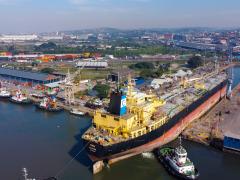
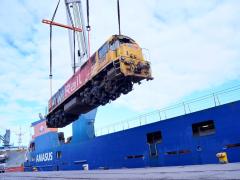
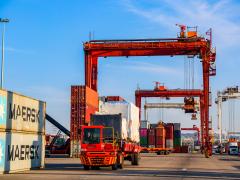
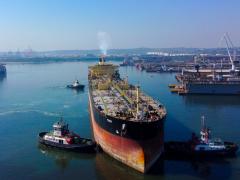
Free on Board or FOB (named port of shipment) Incoterms®2010 is the ninth of eleven Incoterms for the class “Rules for Sea and Inland Waterway Transport”. According to the International Chamber of Commerce (ICC), in “the second class of Incoterms®2010 rules, the point of delivery and the place to which the goods are carried to the buyer are both ports, hence the label ‘sea and inland waterway’ rules”. The other Incoterms®2010 that belong to the second class of Incoterms®2010 are Free Alongside Ship (FAS), Cost and Freight (CFR), and Cost Insurance and Freight (CIF). According to the ICC the ninth Incoterms – Free on Board, at a named port of shipment, means that “the seller delivers when the goods on board the vessel nominated by the buyer at the named port of shipment or procures the goods already so delivered. The risk of loss of or damage to the goods passes when the goods are on board the vessel, and the buyer bears all costs from that moment onwards”. The ICC’s Guidance Note specifies the following, which should be accounted for by the contracting parties. The seller is required to either deliver the goods on board the vessel or to procure goods already so delivered for shipment. “Procure” caters for multiple sales down a chain i.e. “string sales”. It important to note that “FOB may not be appropriate where goods are handed over to the carrier before they are on board the vessel, for example goods in containers”. Consideration should be given to the use of the term Free Carrier (FCA), the second Incoterms. The final ICC “Guidance Note” reminds that FOB requires the seller to clear the goods for export, but it has no obligation with respect to the import of goods. In next week’s issue we will define Free on Board – The Seller’s Obligations. INCOLEARN is prepared by Tariff & Trade Intelligence –
Learning more about Incoterms®2010
Comments | 0
© Now Media. This content is protected by copyright and may not be adapted or republished. If you would like to discuss cooperation opportunities, please contact: editor@freightnews.co.za.