Deadlines for projects and systems designed to make trading across borders in the SADC region seamless are being missed largely due to a lack of political will by member states, according to Sean Woolfrey and Elke Verhaeghe of the European Centre for Development Policy Management.
They write in a recently published study: “SADC member states differ greatly in terms of how big a share customs duties represent in their fiscal revenues, and therefore how willing they are to undertake tariff liberalisation.”
Reliance on the export of unprocessed commodities by SADC also leaves little opportunity for economic integration, they add. For social and political reasons countries are also focusing on local job creation, and are protecting their own manufacturing base. Trade unions have been putting pressure on governments in the region to retain jobs by protecting local industries.
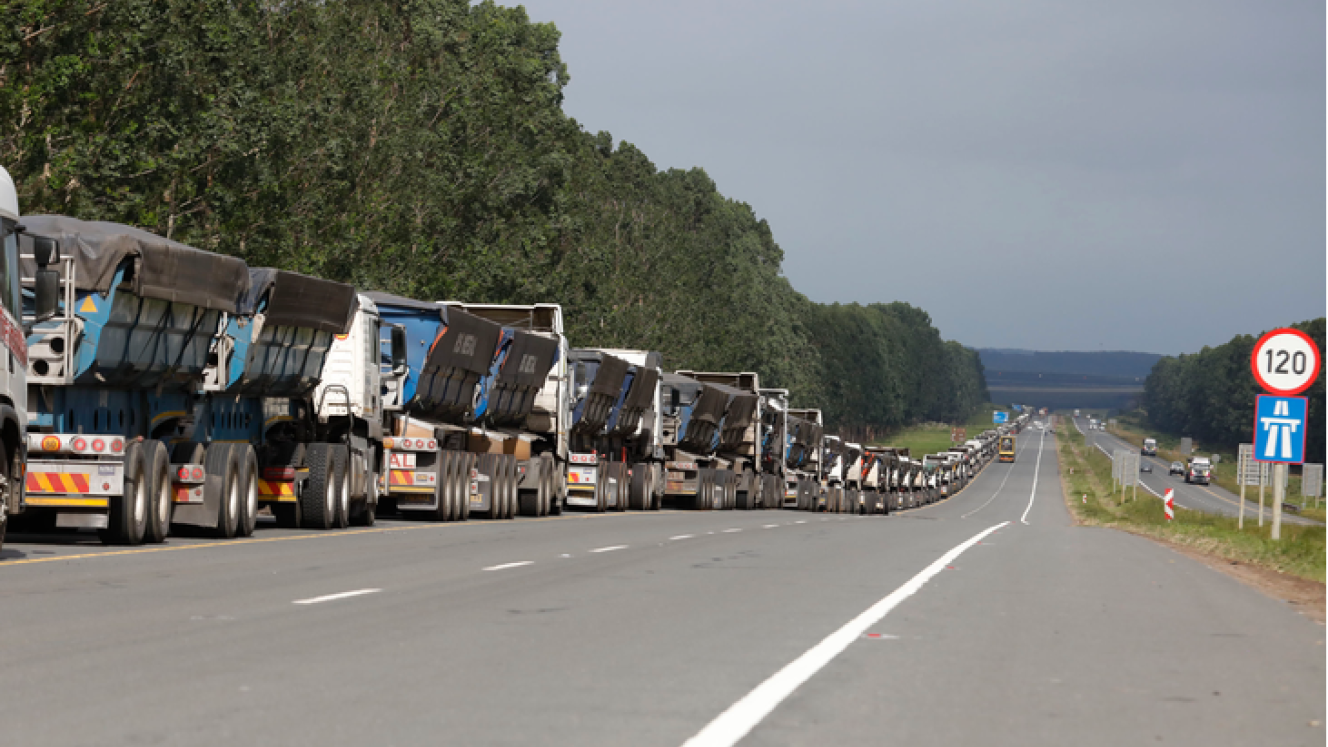
Progress on the removal of tariffs has been offset by rising non-tariff barriers such as discriminatory charges, onerous customs procedures, restrictive rules of origin, and various sanitary and phytosanitary measures and other regulatory barriers, according to Woolfrey and Verhaeghe. These challenges are compounded by a lack of investment in logistics infrastructure, which is one of the biggest barriers to doing business in the SADC region, according to president Cyril Ramaphosa.
Speaking as the outgoing SADC chairperson at the 38th SADC summit held in Windhoek in August, Ramaphosa said efforts by SADC countries to establish a competitive industrial sector and promote greater industrial linkages were being hindered by the lack of infrastructure in areas such as energy, transport and communications. Investment in transport infrastructure was needed to reduce the cost of doing business in the region, he added. SADC has decided to integrate and stimulate trade along the region’s transport corridors, with the North-South corridor to and from South Africa being seen as the most important.
It carries over 60% of regional trade, serves eight countries and interconnects with eight east–west regional transport corridors. But, according to Woolfrey and Verhaeghe, South Africa has been “blocking” progress. One of the stumbling blocks is that the user pays principle proposed for the funding of the corridor is the “subject of political and legal challenge in South Africa in the context of the country’s own road infrastructure development plans. The authors are also critical of private-sector involvement in the development of the free trade area, describing it as “sub-optimal”.
“There is currently little political traction in the region for deeper economic integration through SADC, such as the establishment of an SADC Customs Union.
“Instead, political traction on SADC’s trade agenda is likely to be found where regional trade reforms and initiatives are framed as supporting industrialisation, the demonstrated interest of most, if not all, SADC member states,” the authors conclude.
Lack of investment in logistics infrastructure is one of the biggest barriers to doing business. – Report