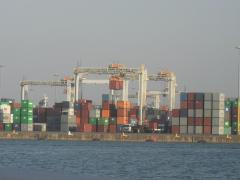
KwaZulu-Natal’s freight performance and manufacturing output have failed to recover to pre-pandemic levels, leaving the province vulnerable to international economic shocks.
Speaking at a Nedbank Commercial Banking event in Mount Edgecombe on Thursday, Spatial Economics senior economist and head of economics and modelling, Justice Matarutse, said the province’s recent manufacturing output remained weak compared with its historical performance.
Spatial freight performance data, which combines geographic and cargo-movement information to measure supply-chain speed, cost and reliability, has also not returned to pre-Covid-19 levels.
“This is something which we think is a big call for alarm,” Matarutse told business leaders.
“It is only eThekwini Metro and Nelson Mandela Bay that have not yet returned to pre-Covid-19 economic performance,” he said.
Local disruptions, including the July 2021 unrest and severe flooding in 2022 and 2024, had constrained industrial productivity, along with infrastructure bottlenecks and electricity and water disruptions, he said.
Spatial Economics data showed that KZN’s real exports in 2025 remained 15% below their 2022 peak, while average export compound annual growth contracted by 5.6% between 2023 and 2025.
Business sentiment reflected these structural challenges. Matarutse said the Durban Business Confidence Index had fallen to 48.82 in the second quarter of 2026, returning to negative territory.
Despite generating R315.6 billion in nominal customs exports in 2025 and recording a trade surplus of R100.8bn, KZN faced significant export-concentration risks.
Five Harmonised System product groups accounted for 73% of provincial exports. These were precious metals, valued at R74.4bn; ores, at R59.3bn; vehicles and parts, at R43.1bn; aluminium, at R36.4bn; and wood pulp, at R17.2bn.
The province’s 10 leading product categories accounted for 85% of its exports.
Matarutse also highlighted critical supply-chain dependencies. Australia supplied 99.8% of KZN’s alumina imports, while all its palm oil came from Indonesia and Malaysia. The United States supplied 62% of the province’s specialised digital control computers.
However, he said opportunities existed to diversify the province’s export base. A “scalable middle” of 151 product groups was valued at R62.3bn, while a “long tail” of 950 product groups was worth R15.7bn.
Strong growth was recorded in addressable categories including structural steel, up 23.4%; mechanical appliances, up 19.6%; medical supplies, up 14.2%; and vegetable oils, up 13.2%.
Dube TradePort chief financial officer Kaya Ngqaka said special economic zones could help address some of the province’s logistics and investment constraints.
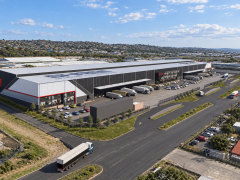
The 3 800-hectare precinct surrounding King Shaka International Airport targets high-value, light-manufacturing industries, including electronics, pharmaceuticals, automotive components and aerospace services. It also provides customs-controlled facilities for secondary manufacturing and value-added processing.
Ngqaka said the precinct’s infrastructure had remained resilient during the 2022 floods.
“When there were floods in KZN in 2022, none were experienced within the SEZ because we are building resilient infrastructure,” he said.
He added that the airbridge linking the cargo terminal with the trade zone had maintained a zero-loss record over 16 years of operation.
Nedbank Commercial Banking senior manager for manufacturing Takatso Sello urged business leaders to collaborate in addressing high operating costs and infrastructure constraints.
“It doesn’t mean that it’s all doom and gloom,” he said.
“We are on a mission to create a network that works for businesses. It’s important that today’s conversation doesn’t end as a conversation. Let’s find solutions.”