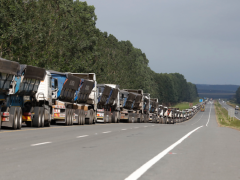
KENYA BECAME the first domino last month to implement axle restrictions on freight trucks in a government initiative to prolong road infrastructure amid increased traffic caused by a growing economy. “The restrictions will extend wherever there is an increase of trucks on the road,” says Elmarie Breedt of Johannesburgbased Makamba Clearing & Forwarding. She believes due to the condition of roads in many African countries, heavy-hauliers should be limited and even kept off the roads if the roads are to survive. The amended law came into effect on August 22 following a notice issued by Transport Permanent Secretary Gerishon Ikiara in early August. It states: “The maximum number of axles which may be fitted on any vehicle shall be SEVEN provided that the rear-most axles shall be steering axles.” In effect this requires the rear-most axles on a vehicle or trailer to be steered when fitted with a 4-axle group. Trucks will therefore have to be converted from 4 to 3-axle vehicles. A 4-axle truck can deliver a maximum of 54 tonnes of cargo, compared with 29 tonnes for a 3-axle vehicle. Non-compliant vehicles will not be allowed to proceed beyond the point where they are stopped. The knock-on effect will be felt at the port of Mombasa where cargo may be subject to standing and warehousing fees while waiting for an available 3-axle. This, along with transporters looking to deal with the cost of converting to 3-axle trucks, could drive up the price of goods.
Kenya acts decisively to protect crumbling infrastructure
Comments | 0
© Now Media. This content is protected by copyright and may not be adapted or republished. If you would like to discuss cooperation opportunities, please contact: editor@freightnews.co.za.