Daimler targets southern African growth
Selling a truck is like
a wedding – a big
celebration where
everyone is happy for
a day. Putting the effort into
getting the truck delivered on
time, and stepping in when
there is an operational problem
after the sale is like a marriage,
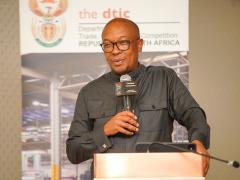
says Kobus van Zyl, executive
director of Daimler Trucks &
Buses.
He told FTW that the
Mercedes-Benz group-owned
commercial division was about
to embark on a major marriage
journey as
it sought
expansion
within
southern
Africa
on the
back of
its newly
launched Regional Centre
Southern Africa.
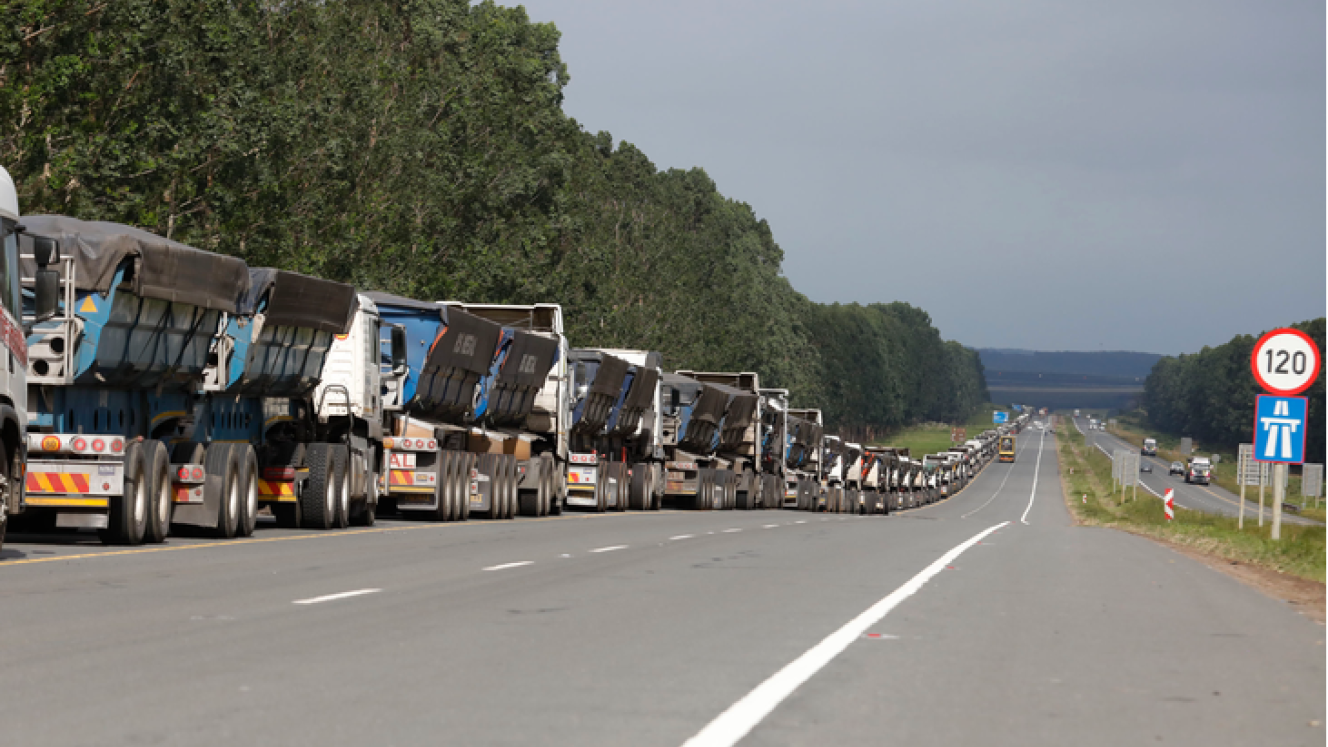
“We have to find the most
efficient, fastest and most costeffective
way of getting our
commercial vehicles – imported
from around the globe, as far
afield as Japan and Brazil –
through South Africa and into
the region and we are currently
investigating the best ways of
doing that,”
said van Zyl.
Distribution
channels are
expected to be
finalised by the
middle of this
year.
“Meanwhile
we are
learning valuable lessons
and finding innovative
ways to overcome the
challenges,” he said,
adding that the
group worked
with multiple
supply chain
partners
for its
distribution.
“We are
lucky to
be able to
offer a strong tender
proposition when
combined with the
group’s passenger
division – and are thus
able to attract the top
suppliers,” said Van Zyl.
Logistics and distribution
challenges, according to Van
Zyl, include working around
the different legal processes
that affect the movement of
goods in various countries
and dealing with ongoing
currency f luctuations – as well
as customers’ limited access to
financing and currency.
“There is no hard currency in
Zimbabwe and
the Zambian
kwacha has
devalued by over
50%, making
it very difficult
to complete a
transaction in
these countries.”
Availability of
retail and wholesale finance in
the southern African region had
proven to be Daimler’s biggest
problem to date, he said.
“South Africa has seen the
rand f luctuate so dramatically
over the past three months and
we’ve had to be very cognisant
of these variations during our
sales process,” explained Van
Zyl, adding however that import
markets, such as Brazil, had
also seen currency depreciations
– which had balanced out the
rand’s fall.
“We have a well-established
global brand and we are finding
solutions to these problems, as
we always take a long-term view
when we invest in a country or a
region,” said Van Zyl,
He added that Daimler was
also exploring ways to stimulate
product beneficiation in the
country, driving the growth of
more local original equipment
manufacturers (OEMs) which
would bring down the costs of
vehicle manufacturing. “We
expect to see far more local
OEMs entering the local and
regional marketplace over
the next two years,” said Van
Zyl, pointing to the recent
investment of R2 billion by
Sumitomo Rubber South Africa
for the upgrade and expansion of
its tyre manufacturing plant at
Ladysmith as a case in point.
Van Zyl pointed out that while
the southern African region was
currently experiencing a “tough
economic cycle” – in line with
the global outlook – it was still
expected to grow at a rate of
3.7% in 2016.
“Growth in the region is also
expected to improve after that
as the global economic outlook
improves, with a growth rate
of over 4.5% expected annually
between 2018 and 2020,”
commented Van Zyl.
He said that while Daimler
was targeting the whole region
for growth, the company was
“particularly excited” about
Mozambique. “There are lots
of coal and gas deals being
signed and huge infrastructure
improvements being made in
and around the capital city of
Maputo,” said Van Zyl.
INSERT & CAPTION
Regional distribution
centre kick-starts growth.
– Kobus Van Zyl