A big boost in the
movement of
more minerals by
rail is expected
by Swaziland Railway when
a new line, the Swazi Rail
Link, becomes operational,
Swaziland Railway’s chief
financial officer, Vusi
Makhubu, told FTW. A
joint project between the
company and Transnet
Freight Rail (TFR), the
line will provide a new
rail option for shippers
to and from Gauteng to
Durban/Richards Bay and
Maputo.
“We’ve finished the
feasibility study, submitted
the report to cabinet and we
are awaiting approval. But
as the people who implement
the project we are moving
forward in the meanwhile.
We meet regularly with
Transnet to address the
details and fill in the blanks
of the feasibility study. For
instance, the engineers from
both sides are meeting and
also crystallising the details
on the ground. The next
matter remaining is the
financing,” Makubu said.
Once up and running,
the new line is expected to
have as its primary users
shippers of minerals. The
route runs from Ermelo in
Mpumalanga to Swaziland
Railway’s rail head at
Sidvokodvo, following the
Usuthu River’s path.
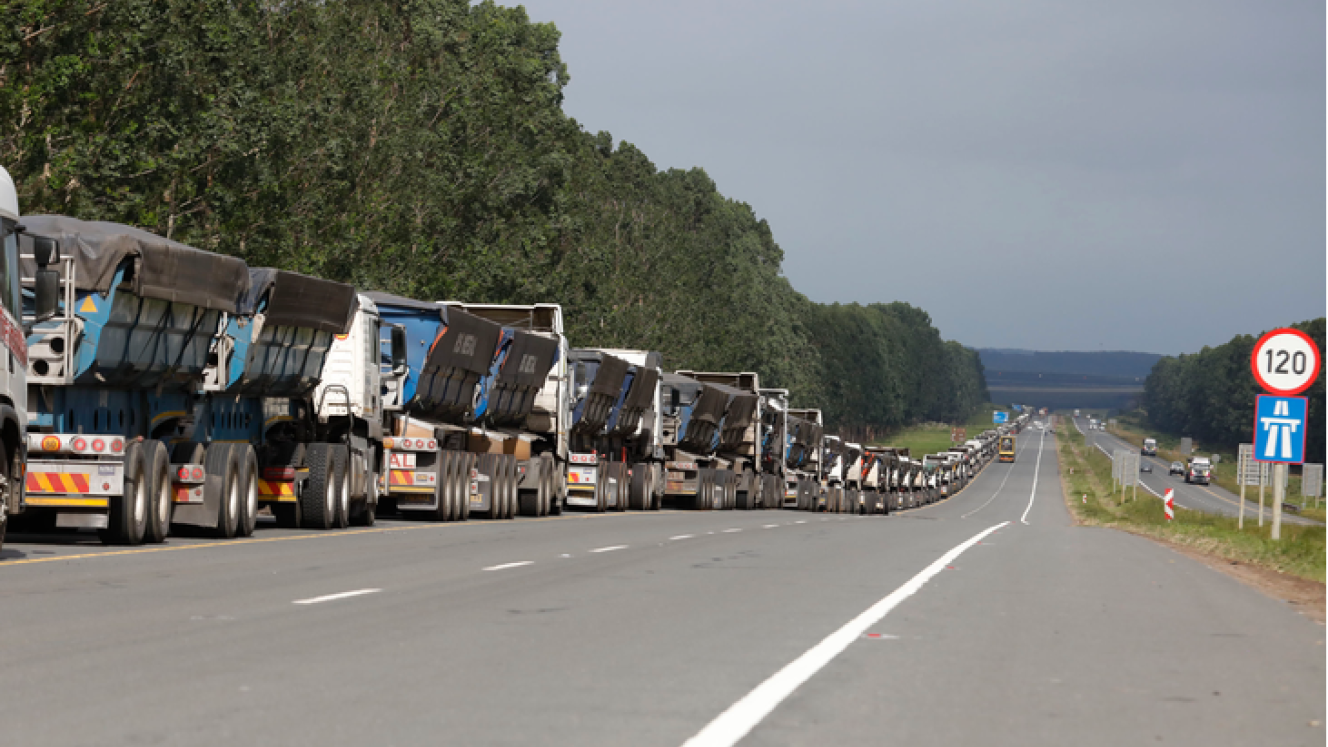
“The line is targeting
commodities, mainly
coal. The line will give an
alternative route to Richards
Bay and Durban to and
from Gauteng. Besides
coal there will be more
magnetite transported. We
in Swaziland are targeting
our huge reserves of coal
that can be moved by rail. As
a railway company
we are creating
capacity
before
demand,
so when the
mines open the
infrastructure
will be there
waiting for
them,” Makhubu
said.
Infrastructure work is
necessary within Swaziland
to conform the existing
lines to the state of the art
Swazi Rail Link. Makhubu
explained: “The new line is a
standard
gauge; a heavy
haul line that
allows up to 100 metric
tonnes per wagon. The
portion of line that now
exists in Swaziland allows
for 22 tonnes per axle or 80
metric tonnes per wagon, so
that length of line will have
to be upgraded. We want to
do
better
than
100
metric
tonnes to
anticipate
future demand.
The line could go up
to 120-metric-tonne
capacity.”
At present, in addition to
magnetite, Swaziland Rail
tranships rock phosphate
from Phalaborwa, South
Africa. “We move a lot of
iron ore dumps from there
going to Richards Bay
where the ore is exported.
Currently we don’t send
minerals to Maputo. TFR
has a line from Nelspruit to
Maputo that South Africa
uses. We handle to Durban,”
Makhubu said.
Joint rail project will boost mineral transport business
Comments | 0
© Now Media. This content is protected by copyright and may not be adapted or republished. If you would like to discuss cooperation opportunities, please contact: editor@freightnews.co.za.