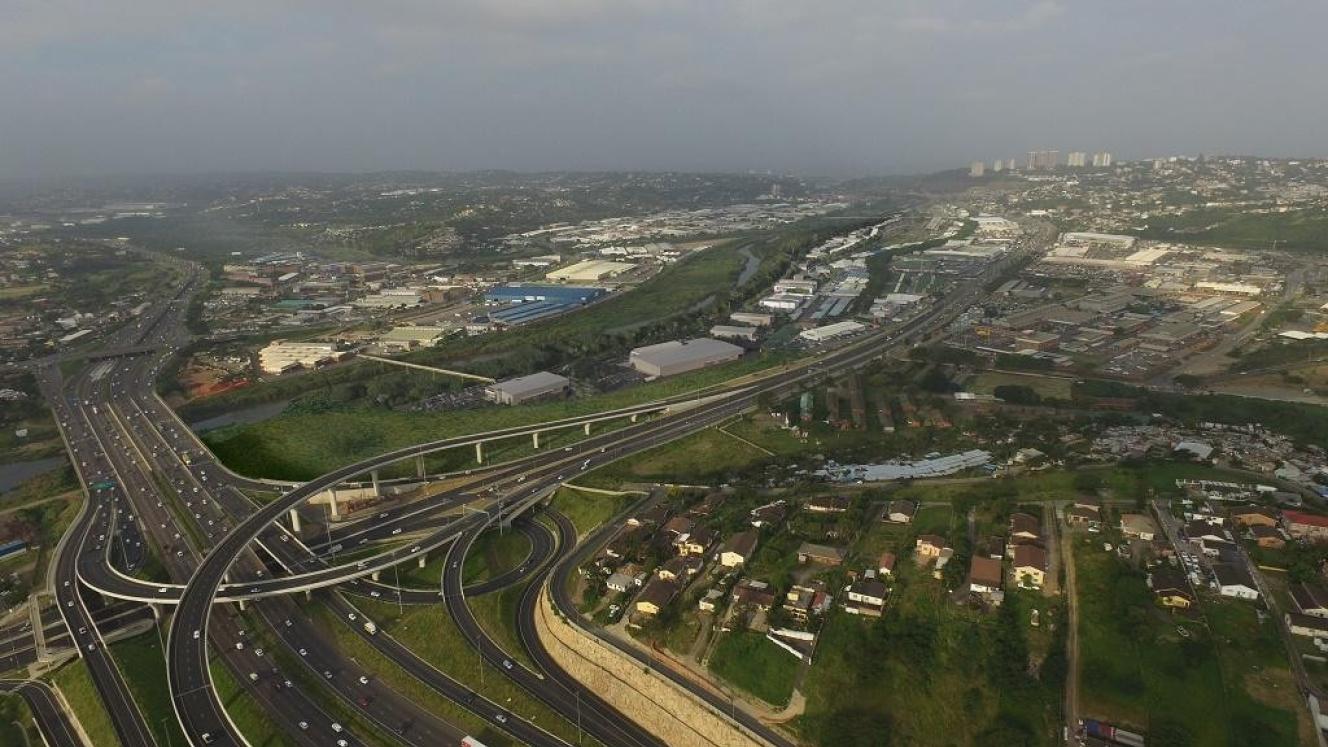
Major investment in Zimbabwe’s road and rail infrastructure will reposition the country’s logistics sector, according to Marvellous Ngundu and Jakkie Cilliers, writing in a study published by the African Futures and Innovation Programme. The investment is needed to regain lost ground. In 1994, approximately 55% of roads were paved and well maintained, according to the researchers. Political instability and economic decline in the late 1990s led to a deterioration of infrastructure. “By 2019, only 19% of roads were paved. Rural areas suffered the most, and transportation became increasingly unreliable, which was exacerbated by fuel shortages.” International loans, including funding from the African Development Bank, have been raised to support road rehabilitation. The Beitbridge-Harare- Chirundu highway, a crucial trade route, is expected to be completed by 2030, improving regional connectivity. Based on current projects, the percentage of paved roads will increase from 20% in 2023 to 23% in 2030 and 32% by 2043, the researchers state. “These figures remain below the average of lower-middle- income African countries, indicating ongoing infrastructure deficits,” they add. Zimbabwe’s railway network has suffered from neglect. “In the late 1990s, lack of investment, political instability and mismanagement led to its decline. By the 2000s, the National Railways of Zimbabwe (NRZ) faced severe infrastructure deterioration, outdated trains and funding shortages. “Freight and passenger services dwindled, making rail transport less competitive. Attempts to rehabilitate the railway sector in the 2010s included seeking foreign investment, but progress was slow. By the 2020s, the railway sector had nearly collapsed,” they state. Similarly, economic mismanagement and sanctions have led to the decline of the aviation sector. There has been some revival, with completion of the expansion of the Robert Gabriel Mugabe International Airport in 2023. Despite the challenges, the authors believe that, “with strategic investments in roads, rail and aviation, the country has the potential to modernise its transport sector, improve connectivity and integrate more effectively into regional trade networks”. By 2043, Zimbabwe could see a significantly improved transport infrastructure with a more reliable road network, a revitalised railway system and a strengthened aviation sector. “This is supported by the country’s transport infrastructure index, which, through these initiatives, can improve from -0.25 in 2023 to -0.09 in 2043 on the current path,” they state. In 2025, the government budgeted ZiG15.7 billion (R722 million) for the reconstruction and rehabilitation of over 44 000 kilometres of road network under its Emergency Road Rehabilitation Programme (ERRP2). This surpassed the target of 11 250km, according to the Department of Roads (DoR), local authorities and the District Development Fund (DDF). One of the major achievements was the completion of the multi- level Trabablas Interchange in Harare, which has helped trucks speed up north-south travel by relieving congestion. The 2026 budget allocation for road development is ZiG2.9bn (R138m), with the priority being the major arteries that serve as a gateway to regional and international trade and those that promote domestic trade, including marketing of goods and services, the DoR says. For rail, the country has turned to China Railway International for a $533m railway cooperation agreement which will finance the rehabilitation of existing lines, installation of new signalling systems, and the acquisition of 17 locomotives and 209 freight wagons. Phase one includes five new stations and a critical Beitbridge- Harare line connecting to South Africa. At the time of going to press, the agreement had not been signed. ER
Investment could reposition transport sector
Comments | 0
© Now Media. This content is protected by copyright and may not be adapted or republished. If you would like to discuss cooperation opportunities, please contact: editor@freightnews.co.za.