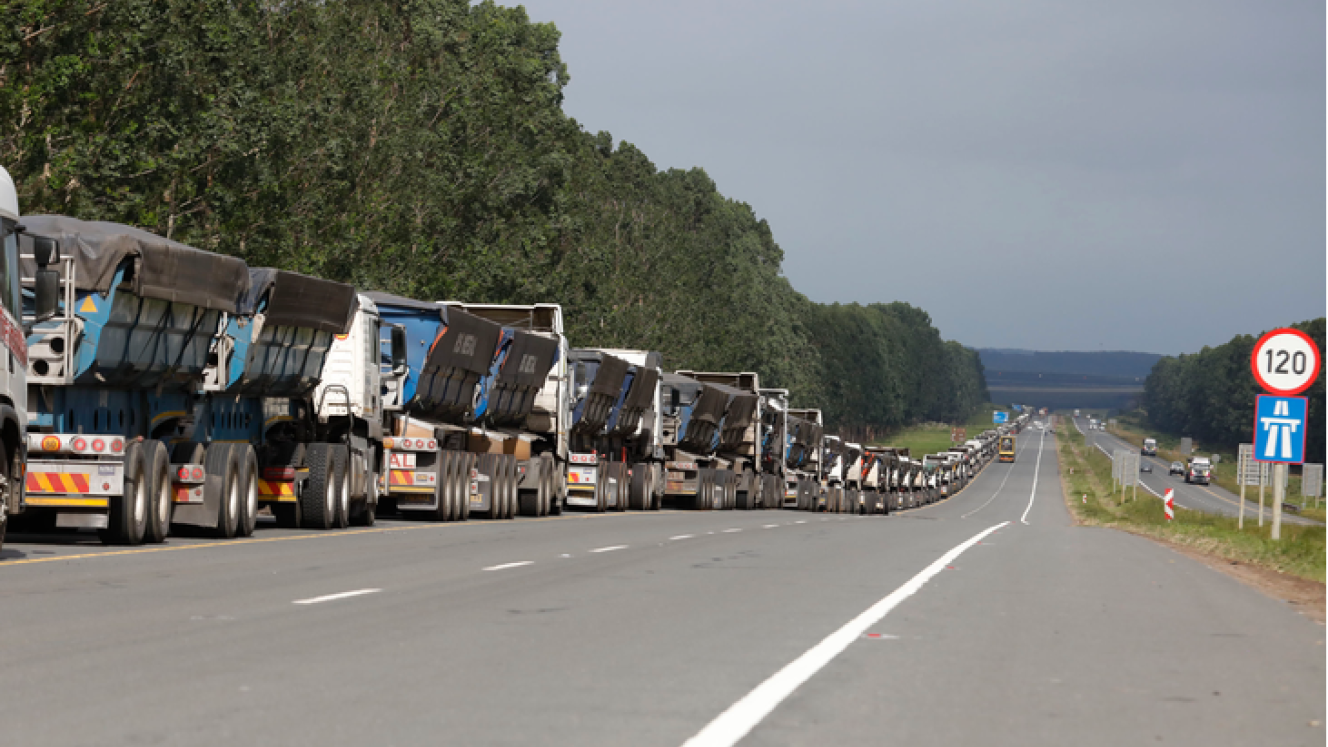
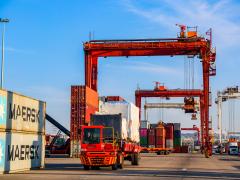
Intermodalism, in a nutshell, is the answer to South Africa’s skyrocketing logistics costs. Utilising different modes of transport, seamlessly – each' for the appropriate leg of the freight journey from origin to destination – and providing an overall transport solution that is efficient and sustainable is what those in the know believe has to happen. According to Prof Jan Havenga, director at the Centre for Supply Chain Management at Stellenbosch University, in the context of South Africa this means using rail for longdistance, high density line-haul movements while using truck transport for consolidation and last-mile distribution at the origin and destination of the line-haul movement. “Successful intermodal solutions will make great strides in effecting the modal shift South Africa so desperately needs. South Africa has inherent spatial challenges and therefore our demand for transport relative to other countries is high,” he explains. “We’re at a time in our history where we have more scope for rail expansion than most of our trading partners. This is in a certain sense fortunate because the other strategies to address transport costs are important but yield less results.” These include strategies such as optimising road transport operations, using more fuelefficient trucks,and upgrading provincial road networks. Havenga sees huge scope for modal shift which could have a dramatic effect and make South Africa far more competitive. “Positive developments towards modal shift and viable intermodal solutions are the refurbishment of our rail system which is well under way. We’re seeing the first successes as rail market share in certain segments has started increasing for the first time in decades. The groundwork has been put in place.” Not everyone necessarily shares his sentiments, however. Many industry stakeholders maintain rail has not truly clawed back any market share and that increased volumes are only a result of capacity increases on the iron-ore and coal rail lines. But Havenga is adamant that change is imminent. “It will take time before results become so visible that the industry gains a high degree of trust. I strongly believe that the turnaround on rail has already started and that it will accelerate over the next five years.” For him integration, referring to the service providers in the supply chain integrating from a process, people and information point-of-view, will be crucial to the success of rail and bringing down logistics costs. “Integration is essential for intermodalism to work. Road and rail must cooperate as complementary service providers offering a more competitive solution than either mode can offer on its own,” he said, referring to the recent memoranda of understanding signed between Transnet Freight Rail and the logistics service providers, Imperial Logistics and Barloworld Logistics. “But much more is required and we are waiting to see the fruits of these relationships. If all rail-friendly traffic on the KwaZulu-Natal-Gauteng corridor is on rail by 2040 we will only have to expand capacity on the N3 by about 20%. If, however, rail maintains its current market share on the KwaZulu-Natal- Gauteng corridor by then, the N3 will have to be expanded by 50%,” says Havenga. “If rail volumes don’t grow the N3 will have to triple in size. So really modal shift is an imperative here.” INSERT & CAPTION I strongly believe that the turnaround on rail has already started and that it will accelerate over the next five years. – Prof Jan Havenga
'Intermodalism is the way forward
Comments | 0
© Now Media. This content is protected by copyright and may not be adapted or republished. If you would like to discuss cooperation opportunities, please contact: editor@freightnews.co.za.