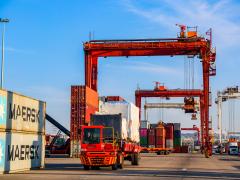
The East African oil and gas industry is on the rise, which is good news for breakbulk and project cargo operators on the continent, according to Pascal Ochquee, Halliburton’s regional logistics manager for Europe and sub-Saharan Africa. “There has been rapid development in East Africa where the oil and gas sector has taken off. And it is growth that is expected to continue, with estimates of between 20 and 30 new operators entering the market in the next three years,” he said at the Breakbulk Africa conference in Cape Town recently. “That bodes well for the breakbulk and project cargo sector as there are always new rigs and equipment coming in.” Ochquee said the rapidly growing economies in the region – showing growth figures between 7.5% and 10% from now to 2016 – had stimulated interest in East Africa and while much of what was happening was very new and untested, private companies and governments were learning the ropes together. “Offshore East Africa is one of the most promising areas for new discoveries and while there is no denying there are challenges, one cannot help but be excited about the prospects in the region.” According to Dirk Matthysen, general manager for Spedag Interfreight Tanzania, the lack and inadequacy of infrastructure is probably the biggest stumbling block at present. “At the same time the capacity of the existing infrastructure is very low and the lack of regional integration slows the movement of cargo tremendously. While the oil and gas activities in the various countries are on the increase, it is imperative to find some real solutions to the challenges because, at present, trying to move a rig around is nothing but a massive headache because of the lack of knowledge of authorities, the lack of integration and the lack of infrastructure.” This is one of the reasons why companies are starting to look at investing in infrastructure themselves. “Addressing infrastructure is high on the priority list of companies operating in East Africa,” said Pamela Yerushalmy, commercial executive Fairseas International. “It continues to impact on the costs, with delays arising from berth congestion and the lack of port infrastructure, especially quayside equipment, which makes it very costly as vessel turnaround times are slow. Various steps are being taken by private roleplayers to bring in their own equipment.” Recently Bolloré Africa Logistics Mozambique, in partnership with the Mozambican public corporation CFM, inaugurated the country’s first oil port in the city of Pemba. CAPTION 1 Pascal Ochquee … ‘The industry needs infrastructure now.’ CAPTION 2 Pamela Yerushalmy … ‘Infrastructure is a top priority.’
Infrastructure stymies East Africa potential
Comments | 0
© Now Media. This content is protected by copyright and may not be adapted or republished. If you would like to discuss cooperation opportunities, please contact: editor@freightnews.co.za.