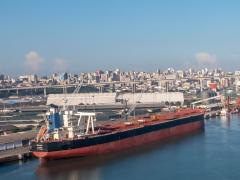
Optimism rules as oil majors continue to invest in West Africa JOY ORLEK IT’S AN unfortunate irony that inadequate port planning appears to be the single greatest obstacle to the West African oil and gas sector realising its full potential. The knock-on effects of port congestion in the form of ever-increasing surcharges are holding back the region’s passport to economic growth and upliftment. When Safmarine set up its multi-purpose division in 2000, the company foresaw the growth potential, particularly in view of the need for Western countries to find alternate sources of energy. That foresight has paid off. From a 2-vessel fleet on long-term charter and about 25 trip-out charters a year at the start, the division now runs 18 to 20 vessels, and the market is growing, says Antwerp-based multi-purpose vessel (MPV) manager Albert Pegg. “Our division specialises in West Africa with services running from the US, North West Continent and South Africa to West Africa for the oil and gas and mining industries. “On top of that there are people involved in work camps and we also provide for their needs from personal effects to perishable cargo, which gives an idea of the scope.” South Africa has been working hard to become a provider of oil and gas services, says Pegg. The recent R1.7bn commitment by Ferrostaal in Saldanha Bay and Cape Town will boost volumes, in Pegg’s view, with more and more cargo being sourced from South Africa in the future. The SAFWAF MPV-service plies four to five vessels depending on cargo flows available. But he cautions against over-optimism, pointing out that oil-producing countries will also be trying their best to add local content. And while they may not have the know-how right now, this could change in the future. “But Safmarine is realistically optimistic and oil and gas and mining projects in West Africa have been the driving force behind our expansion,” says Pegg. And there are good reasons for the line’s optimism. “Oil majors are increasingly investing in West Africa. In Angola you have the likes of BP, Exxon Mobil, Chevron and Total in addition to the many smaller players.” An industry source estimates that between 2004 -2010 $90bn will be invested in the West African oil and gas sector. What is more, a number of projects are moving from easily accessible to more remote areas, which entails more specific project work. “We expect that if the pattern continues we will need more vessels to transport the cargo - not only because there is extra flow but also because the ports are battling to cope with the flow. “This means you have a lot of idle time on your vessel because the ports are congested and you therefore need more vessels.” The impact on profitability is a worry for all operators and while a lot of upgrade work is under way in several ports, Pegg believes that ports will need to step up a gear to make it worthwhile for lines to continue their investment in new vessels. “The ports are our biggest concern as congestion is not only coming from the oil and gas sector. It’s coming from other cargo volumes which are also growing as political stability brings economic stability and improved lifestyle for the people. “Port master plans seem to have underestimated the growth and the inability of ports to cope with demand has affected freight rates. We’re seeing more and more and more congestion surcharges and vessels and bunkers aren’t getting any cheaper, all of which are worrying factors.” But Pegg is confident that the boom isn’t over yet. “We still believe that we will continue to see growth in that area. While it won’t be the double digit growth experienced by the Asian tigers, we can expect a solid performance by the West African countries,” he said.
Infrastructure shortfalls stifle project cargo growth
Comments | 0
© Now Media. This content is protected by copyright and may not be adapted or republished. If you would like to discuss cooperation opportunities, please contact: editor@freightnews.co.za.