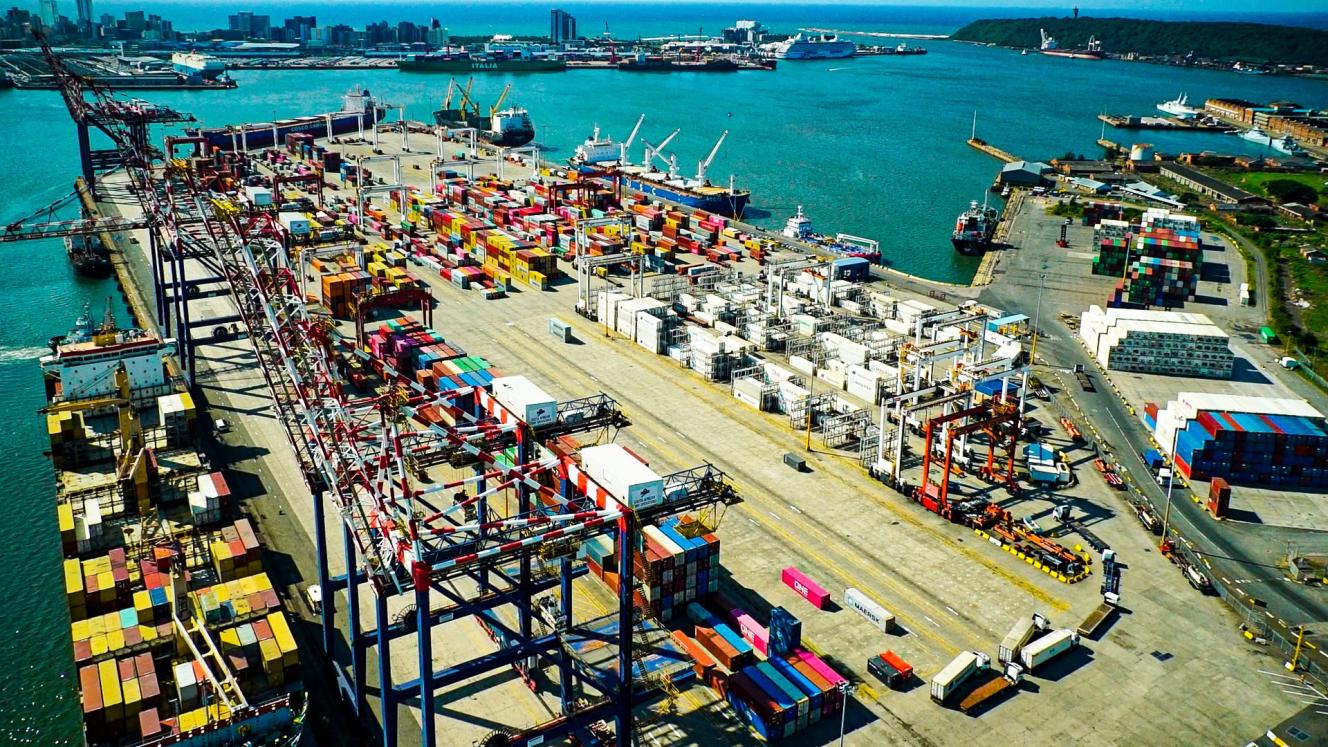
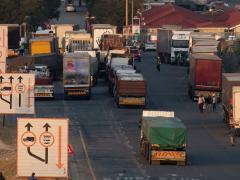
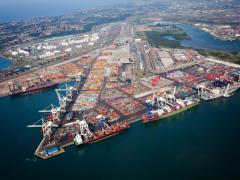
While the African Continental Free Trade Area (AfCFTA) has the potential to transform trade across the continent, infrastructure rather than agreements alone will ultimately determine whether goods can move efficiently between markets. This is according to Satu Kahkonen, World Bank country director, who believes the success of Africa’s single market and increased cross-border trade depends on three critical areas: connected transport corridors, integrated energy systems and open digital infrastructure. “Trade agreements don’t move goods – infrastructure does,” she said at the Infrastructure Africa conference in Cape Town. “If Africa is serious about building a single market, it has to focus on connecting corridors, improving energy interconnections and strengthening digital infrastructure.” Kahkonen said from a World Bank perspective, there was a major focus on the development and improvement of transport corridors as these routes formed the backbone of cross-border trade. However, she noted that corridor development in Africa required a far more targeted approach than in other parts of the world. “In countries like China, the approach has often been to build infrastructure and the economic activity will follow. In Africa, that does not necessarily work,” she said. “Distances are much longer, freight volumes are lower and many products are located far from ports. This means infrastructure investments need to be very intentional.” According to Kahkonen, the type of corridor is also an important consideration. “The different stages of corridor development across the continent must also be taken into account as you have some established routes, such as the Maputo Corridor, that may only require upgrades, digitalisation and improved operational efficiency, while others, including emerging corridors like the Lobito Corridor, are still in the development phase and require coordinated investment to unlock trade potential.” Energy infrastructure is another critical necessity. “Without reliable energy, you will simply not be able to promote industrialisation in Africa. In addition, it has to be affordable.” Kahkonen said Africa had vast renewable energy resources, including hydropower, gas, solar and wind, but these were unevenly distributed across the continent. “Grid connections are important to move power between countries and reduce costs. We are seeing reforms happening. The Southern African Power Pool is one example of the type of regional cooperation required to support economic growth.” Digital infrastructure – the third pillar needed to support trade integration – must see the continent expand broadband connectivity, develop interoperable digital identification systems and enable instant cross-border payments. This, said Kahkonen, would help connect transport and energy systems while facilitating trade across borders. But, she warned, infrastructure alone would not solve the continent’s cross-border trade challenges. “A lack of harmonised policies and regulations across the continent continues to create major inefficiencies at border crossings. Multiple inspections, stops and differing requirements can add days to transit times,” she said. “If policies and regulations were better harmonised across countries, trade could move much more efficiently.” LV
Infrastructure key to unlocking AfCFTA trade potential, says World Bank
Comments | 0
© Now Media. This content is protected by copyright and may not be adapted or republished. If you would like to discuss cooperation opportunities, please contact: editor@freightnews.co.za.