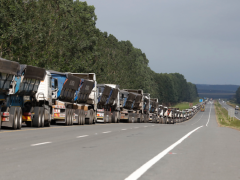
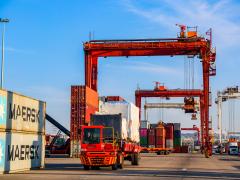
The controversy around the country’s new customs bills is far from over. While much of the debate to date has focused on the impact of the bills on inland terminals such as City Deep, other major issues have not been addressed even though industry role-players have taken them up with South African Revenue Service (Sars) officials. In the past week concerns have been raised over a clause in the new legislation that has now been agreed to by the president stating that a bill of entry must be passed at least two hours before goods are delivered to a port’s export stack. “It is impossible to do that,” a logistics expert in the fruit industry told FTW. “There is no way that we can meet that requirement. We are not even talking about the extra administration work that it is going to require.” Customs experts involved in commenting on the rules for the new Act said current legislation stated that an export bill of entry must be passed before the goods are deemed to be exported or at any other time that the Controller deems reasonable. In practice customs currently uses the shipped on board date as the time of export. “The new legislation is, however, very clear. The goods are considered exported once they are delivered to the stack and therefore the bill of entry must be passed for every export at least two hours before delivery to the stack. This is heading for a very big mess unless it is sorted out before these acts become operational.” The perishable industry in particular will be severely affected. Several industry roleplayers approached by FTW said they were waiting to see the rules guiding this particular clause in the legislation but had already taken it up with officials. “We may still see some reprieve for this in the rules and regulations, but if we don’t we have a major problem on our hands.” Mike Walwyn, chairman of the Cape’s Port Liaison Forum, where the issue was also raised, said it remained on the agenda in discussions with Sars. “There is great concern over this clause in the perishable industry because with several fruits the loading of containers only happens in the wee hours of the morning,” he said. “So grapes for example are often loaded from around midnight on a Friday into the early hours of Saturday, arriving at the port at around 6am. Now according to the new law the bill of entry for those grapes has to be submitted to customs two hours before reaching the stack, which would be 4am on a Saturday morning. That is not possible – shipping lines and agents don’t work at that time and you won’t have a container number and so you will just not be able to do it.” The container number also has to be on the bill of lading for it to be legal – ultimately resulting in a catch 22. Currently customs allows an export bill of entry to be delivered to Sars even though goods have not been packed in a particular container and the container has not been closed and sealed. In terms of the new law, the goods must be packed and sealed in the container before an export declaration can be submitted to customs, which leaves precious little time before delivery of the container to the export stack. These additional customs control measures are likely to increase the costs associated with exports in a country already struggling with a widening trade deficit. “But it becomes even more chaotic if one looks at a situation where you are delivering containers on a daily basis,” said a source in the perishable industry. “We have deliveries that take place over a week for one vessel and we make those deliveries daily. You could have 70 containers on a vessel – all delivered to the stack spread out over the week. If this legislation was understood correctly we would have to have a bill of lading for each container, together with a separate export bill of entry. It is going to be a shambles with escalating costs which will do nothing to promote exports.” Walwyn said a close watch was being kept on the rules in the hope that the problems pointed out to Sars with regard to this particular issue would be addressed. CAPTION Grape exports – a bunch of problems … they often arrive at the port at around 6am which means the bill of entry would need to be submitted to customs at 4am.
Industry questions 'impossible' export deadline
Comments | 0
© Now Media. This content is protected by copyright and may not be adapted or republished. If you would like to discuss cooperation opportunities, please contact: editor@freightnews.co.za.