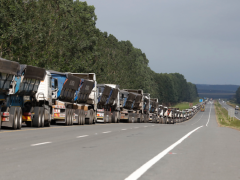
Questions have been raised around the accuracy of the truck hijacking statistics released by the South African Police Service (SAPS) last month and industry leaders are on a quest to bust the urban myths and uncover the “real story”. According to official police statistics, nationally truck hijackings have increased by 6.6% over the past 10 years – 2004/5 to 2013/14 – and recorded a 5.1% increase in 2013/2014 (see the graph below for a provincial breakdown). But how accurate are these figures with South Africa’s culture of underreporting crimes? “The under-reporting of crime undermines efforts to combat and prevent crime in South Africa. Only real, consistent and grassroots improvements in both policing and court services will change this,” said Lizette Lancaster, manager of the Crime and Justice Information Hub at the Governance Crime and Justice Division of the Institute for Security Studies. She noted that mistrust of the police and the justice system were some of the major reasons for underreported crime. “People are more likely to report a crime if they have a positive attitude about the police. However, many crimes are not reported because the victims believe that the police will not care, that they will be corrupt (eg, taking bribes and not acting against the perpetrators), or that they will be unable or unwilling to do anything to solve the crime,” said Lancaster. Gavin Kelly, technical and operations manager of the Road Freight Association (RFA), told FTW that since the organisation had formed a task force with SAPS he believed the figures would be more accurate for 2014/2015. “Through the task force, and with our truck hijacking hotline, we are trying to better understand hijacking trends and patterns and are encouraging transporters to report the crimes.” He noted that if the “real story of truck hijacking” was uncovered, it would help industry, investigators and the police to have a clearer understanding of the scope, size and nature of the problem they are facing, as well as how to address it. Kelly said that since the task force had been established and the truck hijacking reporting hotline created five months ago, there had been progress. “Industry is reporting incidents and we are already forming a clearer picture around the modus operandi, the type of high-risk commodities that are being targeted, the seasonality of the crimes – demand for certain types of goods increases during certain times of the year – and where the most targeted spots are,” said Kelly. He said the task force was also working with customs and the South African Revenue Service at the border posts to identify how many hijackers brought goods/trucks into neighbouring countries.
Industry quest to uncover 'real' hijack stats
Comments | 0
© Now Media. This content is protected by copyright and may not be adapted or republished. If you would like to discuss cooperation opportunities, please contact: editor@freightnews.co.za.