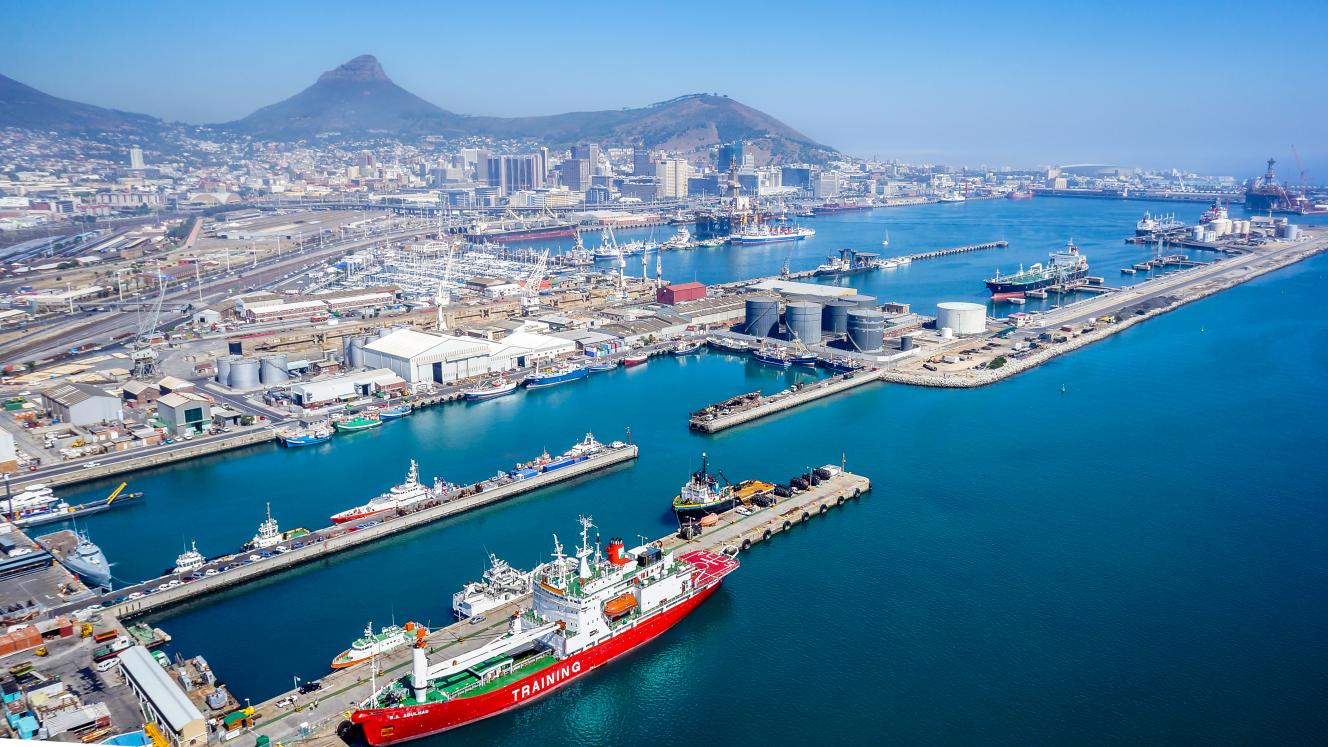
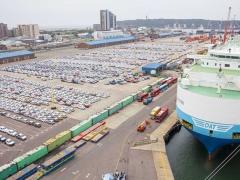
Mediterranean Shipping Company chairman Captain Salvatore Sarno pulled no punches about the actual Port of Durban’s poor efficiency and productivity in his keynote address at the Durban Chamber of Commerce and Industry ‘Exporter of the Year’ awards last week. “It is absolutely unacceptable that we pay for a first class ticket and we travel in third class,” said Sarno, referring to the unacceptably high port charges. Citing figures published by the South African Port Regulator (FTW October 15, 2010) that rank the Port of Durban as one of the most expensive in the world, Sarno was in full agreement. “Comparing the Durban port expenses of three of MSC’s vessels on the European trade against those of the ports of Antwerp, Rotterdam, Felixstowe and Le Havre, I can assure you that Durban was the most expensive followed by Le Havre, Felixstowe, Rotterdam and Antwerp.” He believes that the industry needs to present a united front to reverse the trend. “It is time that all of us, cargo and ship owners, together with the freight forwarding community join forces – and our protests must reach the Minister of Transport, the Minister of Public Enterprises and the Minister of Finance because they control the budget.” Currently – thanks to competition – freight rates are at a level never seen before, says Sarno. “Actually, it costs more to truck a container from Gauteng to Durban than to ship the same box from Durban to Kenya, Tanzania, India, Singapore or Hong Kong. The freight rates to/ from Europe and the USA are the same as they were 15 years ago.” For shipping lines, an inefficient port is the last straw. “When there is no more efficiency, when lack of new equipment or labour disputes slow down productivity, when trucks are delayed in a traffic queue for 7-8 hours before being able to deliver a container to the vessel stack, and when that stack is open only for three days and the terminal will not allow late arrival – and when even TFR is not granted enough time to bring the containers into the terminal, that’s the beginning of the end. “Both port and terminal become congested and the loss to shipping lines whose vessels are delayed is astronomical. Their only recourse is the imposition of a surcharge or increased freight rates – and that’s what’s happening at present.” The figures speak for themselves. From January to September MSC’s 215 vessels have suffered a delay at anchorage of 12 385 hours totalling 516 days. The period May-June- July, which was impacted by the three-week Transnet strike, has accumulated 7 736 hours or 322 days. “We have not seen comparable congestion in the past 25 years,” said Sarno. “Thanks to the strike we have lost more than $15 million and this during a period of the worst economic crisis on shipping industry record.” Port management is doing its job professionally and knows what needs to be done to drastically improve the situation. This is no time for a monopolistic attitude, says Sarno. A pay disparity appeared to be at the root of the Transnet strike earlier this year. “I don’t know whether such a disparity exists, but I know that for a modern industry such as a port it is necessary to invest as much in people as in equipment. And here I refer to the normal labour force. Invest in their culture, make them proud to do a good job. Proud to be more productive than other ports around the world. “During the strike I begged Transnet to find a compromise with the unions and to halt the strike and was told not to interfere because it was not my business. “But the port is my business. The ports are not the private property of Transnet. The ports belong to me, as a resident citizen, belong to all of you as cargo owners and users. “Without all of us there would be no port.” Clearly the time to act is NOW. * Ironically his address coincided with the release of Transnet’s interim results recording a 7.6% increase in revenue to R18.7 billion. TNPA increased revenue by 15.6% to R4.2 billion as a result of higher cargo related activity which was up 11.8% and a 3.9% tariff hike. TPT revenue was up 22.5% to R3 billion due to a combination of global economic recovery and Soccer World Cup-related demand, which boosted container volumes by 15.7% as well as an increase in automotive volumes.
‘Industry must unite against port inefficiency’
Comments | 0