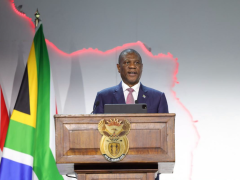
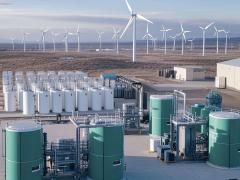
Fragmented policies are undermining mining investment and the country’s competitiveness, highlighting the urgent need for regulatory alignment to support sector growth and its decarbonisation efforts. According to Shamini Harrington of the Minerals Council South Africa, while much has been said about the sector’s role in economic development and the opportunities presented by critical minerals, insufficient attention has been given to the policy framework required to deliver on this potential. “We’ve heard a lot about the opportunities around critical minerals and the role mining can continue to play in job creation and economic development,” she said. “What we haven’t really spoken about is the need for an integrated, coherent and consistent policy as an enabling platform for us to be able to do that.” Harrington said policy needed to cover responsible mining, decarbonisation, investment and global competitiveness “in a coherent fashion” if South Africa was to sustain its existing mining base and attract new capital. The council has been calling for a coordinated, integrated licensing system – effectively a one-stop shop for mining-related approvals that allows for the acceleration of mining applications in a coherent manner. “We are looking at covering mining, environmental, water and land use approvals in one system,” said Harrington. “This would significantly reduce fragmentation and uncertainty.” Currently, mining companies must approach different departments for separate approvals. “If you need a water licence, you need to go to the Department of Water Affairs. If you need air quality licences, that is in another department. Mining rights, again, in another space. It is a cumbersome, linear process that delays projects and deters investment.” She said beyond licensing reform, the council was also actively looking at other growing risks facing the mining sector. “Water is emerging as a strategic risk. It remains a key and invaluable input, and scarcity is growing. This is posing a threat to business sustainability.” According to Harrington, mining operations are geographically fixed to ore bodies, many of which are located in water-stressed catchment areas. On the climate change front, she said the mining sector required climate policies that were balanced, proportionate and grounded in practical realities. “A just energy transition must allow the sector to invest, compete and simultaneously decarbonise. The mining sector continues to progress energy efficiency, technological improvements and sustainability-linked investments to reduce its climate and environmental footprint. To date we’ve seen about 1.8 gigawatts of renewable energy entering the market. This is huge. The sector is aiming for 7.5 gigawatts.” LV
Industry calls for integrated licensing system
Comments | 0
© Now Media. This content is protected by copyright and may not be adapted or republished. If you would like to discuss cooperation opportunities, please contact: editor@freightnews.co.za.