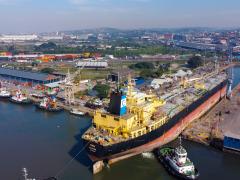
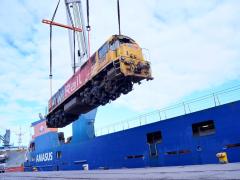
DELIVERED EX SHIP (DES) PART II – The Selller's Obligations THE INTERNATIONAL Chamber of Commerce (ICC) defines the tenth Incoterm, Delivered Ex Ship (DES), at a named port of destination, as “the seller delivers when the goods are placed at the disposal of the buyer on board the ship not cleared for import at the named port of destination. The seller has to bear all the costs and risk involved in bringing the goods to the named port of destination before discharging. If the parties wish the seller to bear the costs and risks of discharging the goods, then the DEQ term should be used”. It is important to remember that this term can only be used when the goods are to be delivered by sea or inland waterway or multimodal transport on a vessel in the port of destination. Professor Jan Ramsberg, the chairman of the ICC Working Party on Trade Terms, identified ten obligations that the seller might need to fulfil in terms of Delivered Ex Ship: (1) the provision of goods in conformity with the contract; (2) licences, authorisations, and formalities; (3) contracts of carriage and insurance; (4) delivery; (5) transfer of risks; (6) division of costs; (7) notice to the buyer; (8) proof of delivery, transport documents or equivalent electronic message; (9) checking, packaging, marking; and (10) other obligations. The provision of goods in conformity with the contract implies that the documents stipulated in the contract of sale must be provided. Llicences, authorisations and formalities must be obtained by the seller at his own risk and expense. The seller must contract for carriage at his own expense to the named place. The seller has no obligation in respect of the contracts of insurance. The delivery of the goods by the seller must be on board the vessel at the unloading point in the named port of destination on the specified date. As for the transfer of risks, the seller bears all risks for loss of or damage to the goods until delivery has taken place at the named place. Regarding the division of costs the seller must pay all the costs relating to the goods up to delivery at the named place. The seller must give sufficient notice to the buyer of when and where the goods will be placed at his disposal. In respect of the proof of delivery, transport documents or equivalent electronic message the seller must provide, at his own expense, the usual documents or other evidence to enable the buyer to claim the goods from the carrier at the point of destination. Depending on the stipulations in the contract of sale the checking, packaging, marking costs are for the seller’s account. As for other obligations, the buyer may request the seller’s assistance with information regarding the goods and the export requirements, and if necessary to procure insurance. Next week’s column will focus on the buyer’s obligations under Delivered Ex Ship (DES).
Incolearn – Learning more about Incoterms 2000
Comments | 0
© Now Media. This content is protected by copyright and may not be adapted or republished. If you would like to discuss cooperation opportunities, please contact: editor@freightnews.co.za.