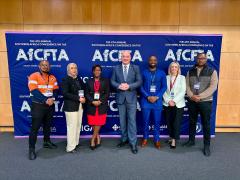
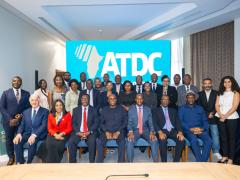
African mining stands at the threshold of a new era, with the capacity to play a far more significant role in global markets while driving industrialisation and economic transformation across the continent, according to Frans Baleni, chairman of the executive advisory board of the Investing in African Mining Indaba. “The global transition to green energy is accelerating and Africa holds a critical advantage, accounting for an estimated 55% of the world’s key minerals required for the energy transition,” he said. “Despite contributing less than 4% of global emissions, the continent sits at the heart of the world’s decarbonisation effort. These realities underscore Africa’s indispensable role in shaping the world’s future. It highlights the opportunity for the continent to move beyond being merely a source of raw materials and become a central player in global value chains.” Baleni said mining presented Africa with the opportunity to bring about a fundamental transformation, but cautioned that this would only be realised if the continent deliberately moved beyond a traditional extractive model. Referring to the Copperbelt spanning Zambia and the Democratic Republic of Congo, he said that Africa’s endowment of copper, platinum group metals and rare earth elements placed it at the centre of the global energy transition. These minerals, he said, were essential not only for renewable energy technologies, electric vehicles and digital infrastructure, but also for Africa’s own industrial development. “This opportunity is transformational, but it is not automatic,” said Baleni. “It requires time, sustained investment and, above all, strong political commitment. “Africa cannot afford to repeat the mistakes of the past by serving only as a foundation for global supply chains without securing meaningful benefits for its own people.” He stressed that Africa must define what “critical minerals” mean on its own terms, rather than allowing the concept to be shaped solely by global demand. Critical minerals, he said, should be those that support industrialisation, beneficiation and economic diversification within African countries themselves. Baleni said governance, innovation and leadership were critical to ensuring that the mining sector delivered long-term value. He pointed to a generational shift under way across the industry, with new leaders increasingly focused on sustainability, technological innovation and resilience in the face of emerging risks, including cybersecurity and operational disruption. Inclusion, particularly the participation of women, was another central theme of his address. While progress has been made, Baleni said true representation remained limited. Calling on governments, investors and industry stakeholders to work together, Baleni said partnerships would be critical to ensuring that Africa secured its fair share of value from the global energy transition. LV
Inclusive growth non-negotiable
Comments | 0
© Now Media. This content is protected by copyright and may not be adapted or republished. If you would like to discuss cooperation opportunities, please contact: editor@freightnews.co.za.