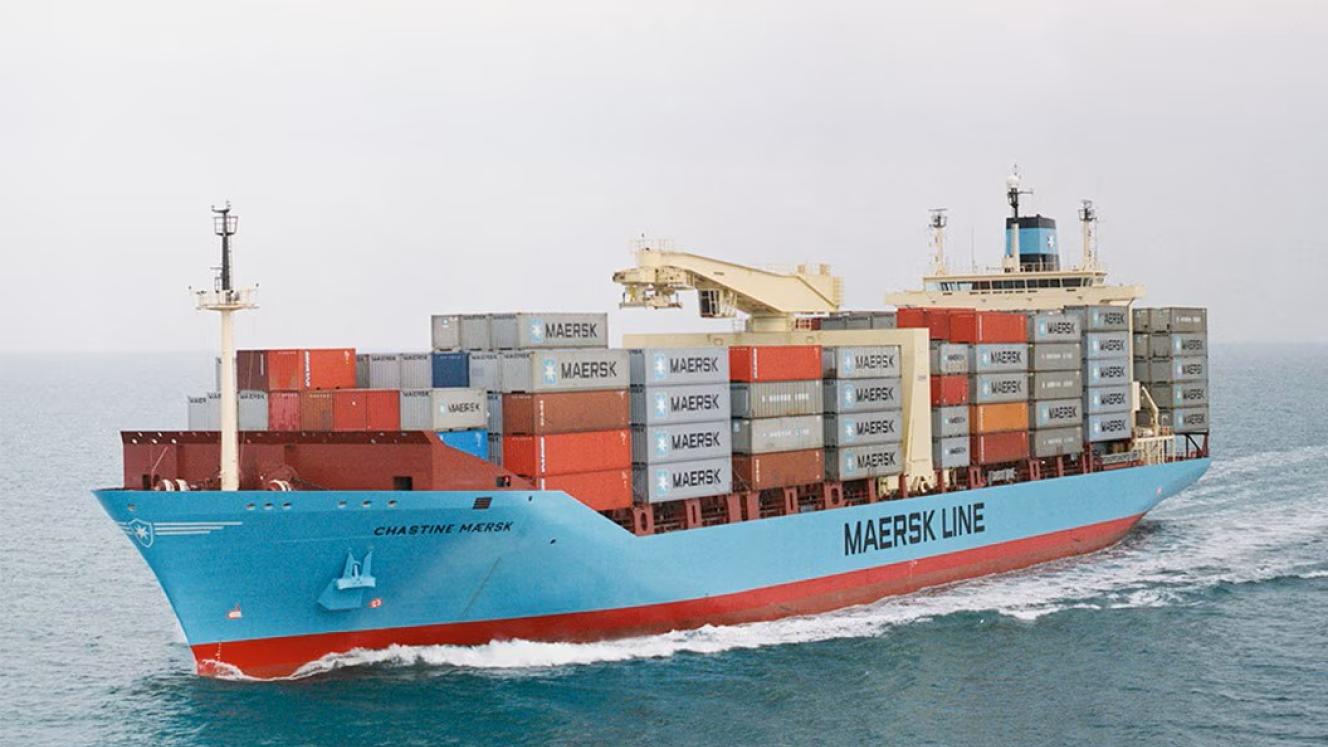
South African importers and exporters have raised concerns about recent Peak Season Surcharges (PSSs) announced by shipping lines Maersk and CMA CGM on shipments from the Far East to Southern Africa.
The surcharges will see Maersk implementing fees of US$250 per 20-foot and US$500 per 40-foot container from July 1. CMA CGM has already introduced charges ranging between US$400 and US$550 per TEU from June 21.
The surcharges apply to trade lanes connecting the Far East with South Africa, Mauritius and Mozambique.
The South African Freight and Logistics Association (SAFLA) said it was concerned about the timing of the surcharges, noting that local importers were already grappling with elevated freight costs, currency volatility, high domestic logistics costs and weak consumer demand.
SAFLA executive officer Dave Logan and vice-chair Jonathan McDonald told Freight News the financial impact would be significant.
“For importers moving regular 40-foot volumes from China and the Far East, a US$500 surcharge per container quickly translates into a significant unbudgeted landed-cost increase,” Logan and McDonald said.
“When converted into rand and added to duties, VAT, inland transport, port-related costs and working capital costs, the effect on importers is more acute than the headline dollar amount suggests.”
The association warned that while some businesses might absorb part of the increase temporarily because of fixed-price contracts, a meaningful portion would inevitably be passed through the supply chain to wholesalers, retailers, manufacturers and ultimately consumers.
Limited alternatives
SAFLA expressed concern about the frequency of rate adjustments on the trade lane and the short notice provided, calling for greater predictability and transparency.
The association said the South African trade lane did not offer unlimited carrier options and that larger importers had limited ability to switch volumes at short notice.
“Some importers may try to pull orders forward ahead of surcharge implementation dates, but this creates its own pressure on working capital, warehouse space and port flows,” Logan and McDonald said.
“Alternative sourcing from markets such as India, Vietnam or Bangladesh may be considered in some categories, but this is a medium-term strategy rather than an immediate solution because supplier qualification, quality assurance, product specification and lead-time reliability all take time to establish.”
Export competitiveness concerns
South Africa's export sector, which relies heavily on imported manufacturing inputs, has also expressed concern about the additional costs.
Exporters Western Cape chairman Terry Gale questioned the shipping lines' justification for the increases. “The question must also be raised – what peak season? With the South African economy in the doldrums, I do not foresee any pre-Christmas rush, or any rush at all,” Gale said.
He noted that the global trading environment was already under pressure.
“The Middle East crisis and resultant rising fuel costs are making business difficult, plus there is the proposed PvOC (Pre-Export Verification of Conformity) coming into effect from September that will add more cost to the basket,” he said.
For local manufacturers competing in export markets, the surcharge represents an additional cost burden.
“As many of our export products require raw material or additives in the manufacturing process, this additional surcharge will add to the local cost of the product and make us less competitive on the global stage,” Gale said.
“They can have a very negative impact on sourcing from the East and importers will look at other markets for supply. There is also no direct service from China, and the transit and lead times are making this market less competitive.”
SAFLA said South Africa's domestic logistics challenges amplified the impact of international freight cost increases.
“International freight surcharges are outside the control of local importers, but their impact is amplified when local port, rail, road, customs and administrative costs are already high,” Logan and McDonald said.
The association urged carriers to provide clearer justification and longer notice periods for future rate increases, while advising cargo owners to engage early with freight forwarders to manage the additional cost exposure.