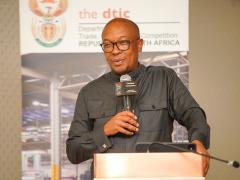
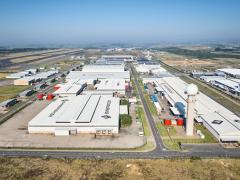
After a careful look at the only partially successful industrial development zones (IDZs) programme initiated in 2000, the government has come up with a new scheme designed to rectify some of the faults that it has identified in a review procedure. The department of trade and industry (dti) started IDZs to support industrial development in the host regions, and with a special focus on export-oriented value-added products. A key requirement for designating an IDZ was proximity to either an international sea or airport. Consequently, four IDZs were designated in Coega in Port Elizabeth, East London, Richards Bay and the OR Tambo International Airport. All are operational except the Ortia IDZ. But the general perception in SA business was that the IDZs fell short of their ideal form – primarily because of a lack of tax and other incentives to drive industry involvement. They were primarily to encourage geographical relocation of export industries to help develop some of the less prosperous regions – such as the Coega IDZ at the new deep-water port of Ngqura in the highly under-employed and economically disadvantaged Eastern Cape, according to Nada Reyneke, head of international trade at the Johannesburg Chamber of Commerce and Industry (JCCI). “But, as these development regions are removed from the main industrial hubs of the country,” she told FTW, “they are of limited benefit to the export industry in general.” Minister of trade and industry, Rob Davies, noted that, while the IDZs had displayed some benefits, they had not succeeded as much as had been hoped. The achievements, he said, included a total of 40 investors attracted into the IDZs with more than R11.8 billion in investments generated and more than 33 000 jobs (both construction and direct) created. But, despite these, it was felt that more could have been achieved, he added. The department’s subsequent review of the IDZ programme has identified certain challenges that need to be addressed in order to improve their performance levels. The result of the review, according to Davies, has been the special economic zones (SEZ) policy and Bill.
IDZ overhaul will address faults
Comments | 0
© Now Media. This content is protected by copyright and may not be adapted or republished. If you would like to discuss cooperation opportunities, please contact: editor@freightnews.co.za.