Greater transparency is crucial if
government agencies like Transnet
Freight Rail (TFR) are to achieve closer
collaboration with the freight and
logistics industry.
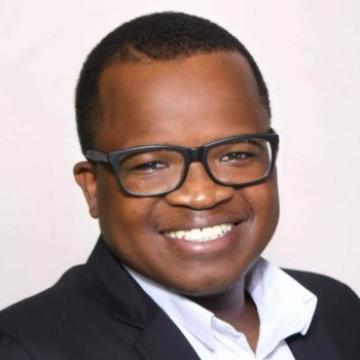
“They need to be more
transparent about their
operations and business
strategies, including the
cost implications and the
financial risks,” transport
economist Andrew
Marsay told delegates at a
joint FTW/ JCCI business
breakfast last week.
He suggested that
Transnet had been less
than open about the
funding of its over R350-
billion Market Demand
Strategy (MDS), pointing
to a small notation contained in the
parastatal’s 2015 financial statements
that reads: “With approximately
19.0% of Transnet’s revenue and
34.0% of its EBITDA impacted by
economic regulation, unless the
relationships with regulators are
managed proactively and strategically
their decisions could have a significant
impact on investment decisions,
investor confidence and ultimately
on the execution of the MDS R336.6
billion capital investment plan”.
The statement goes on to say
that potential
corporatisation of
the National Ports
Authority “poses
significant risks to
Transnet, as it could
have a material
adverse impact on
the company, both
financially and
strategically, and
could trigger default
clauses of Transnet’s
funding agreements”.
“Though Transnet
is well aware of this
risk, it does not make it public,” he said.
In his view Transnet could become
a successful enterprise by, amongst
others, finding “world-best, even
majority owner partners for the best
parts of the business – not the dregs”.
But for that to happen, the first
objective would be transparency about
commercial risks.
INSERT AND CAPTION
Transnet has been
less than open about
the funding of its
over R350-billion
Market Demand
Strategy.
– Andrew Marsay
Hive off the best parts of the business, economist tells Transnet
Comments | 0
© Now Media. This content is protected by copyright and may not be adapted or republished. If you would like to discuss cooperation opportunities, please contact: editor@freightnews.co.za.