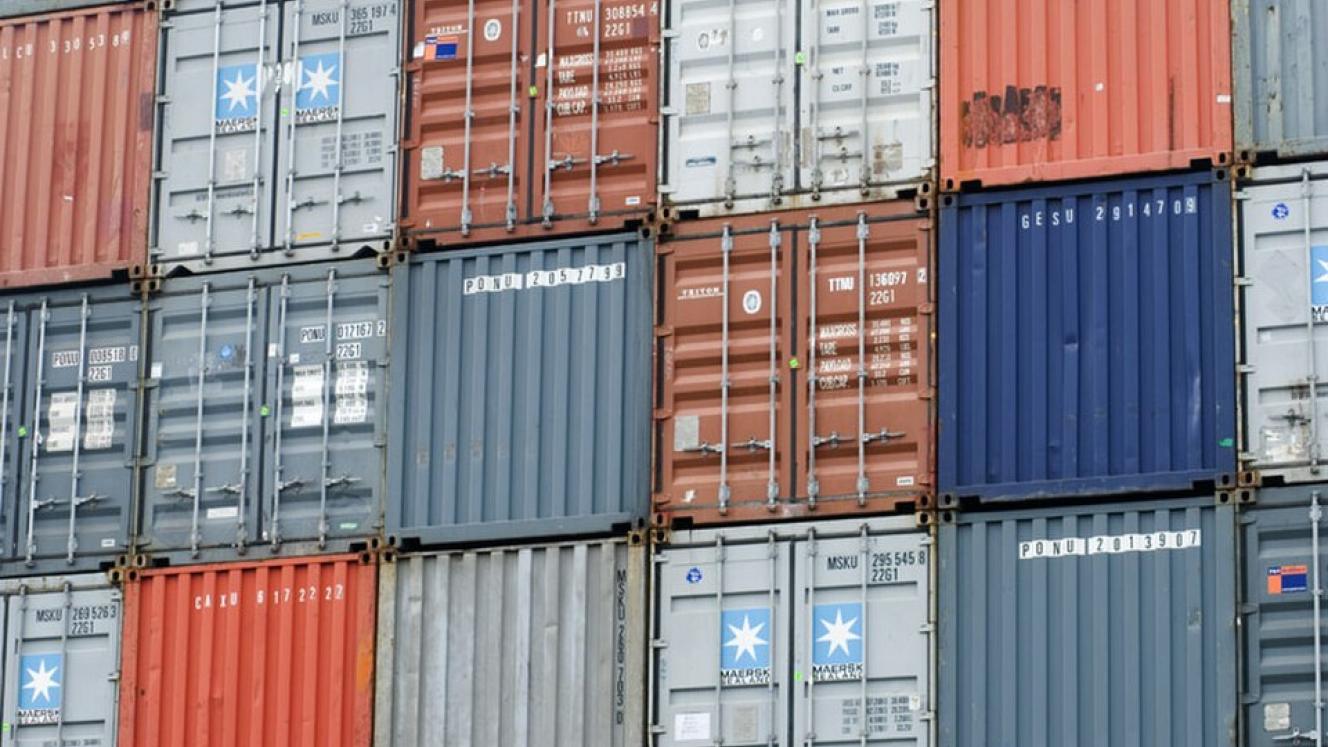
THE WORLD shipping industry is currently battling slim margins, with newbuilds flooding into the market on the supply-side of the equation. And on the major east-west trades, a huge proportion of the new-builds are superships. In the very large container ship (VLCS) category – ships over 7 500-TEU capacity – there are now 176 ships in service and a further 295 on order. They represent 47.6% of the total orderbook in teu terms, according to AXSAlphaliner data released to FTW. There’s certainly demand there, with shipping lines’ sales booming. But the whole industry is marked with plunging margins. The latest report from market analysts, Transport Intelligence (Ti), released to FTW by marketing manager, Joanne Hutchinson, revealed that whereas revenues of the major shipping lines almost doubled between 2002 and 2006, average operating margins rose by just 1.2% to 3.4%. “However,” the report added, “this small increase masks a roller-coaster ride over the past five years when margins rose as high as 11.6% at their peak in 2004.” Ti attributed the sharp fall in margins in 2006 to the levels of new-build capacity which the shipping lines had added to their fleets to exploit the high volume growth, mostly out of China. “The softness in the rates which resulted, combined with significantly rising costs,” said Ti, “hit the bottom line of every container shipping carrier. Profits have only stabilised due to consistently strong levels of demand. “Early signs are that this year will see a rebound due to firmer rates and continued volume growth.” Has the same truth applied to the SA shipping trades? Yes it has, according to three shipping executives, although the finite numbers attached to the calculations in the SA market are much smaller than on the supership, major trades. “Margins are tight due to increasing costs attributable in particular to the increased costs of bunkers and the longterm investment in new ships which are acquired not only to serve market growth, but as an investment in future trade,” Alan Jones, Safmarine’s Africa region executive told FTW. Another un-named shipping executive told us that a direct comparison of the costs in the report with those for SA could not really be done – because the major trades, linking the Far East with Europe and the US, are the giants’ playground. "We’ve no local experience of these container-carrying gargantuans – as they’re not on the SA trades." And they won’t be – “At least in our lifetimes,” said Iain McIntosh, marketing manager of Mitsui OSK Line (MOL). “There’s never likely to be the necessary cargo volumes in this part of the world.” But where he does see the superships coming into play – and possibly placing undue pressure on available infrastructure – is in terminal capacities on the big-ship trades. “Terminal capacity globally is already being put under stress,” McIntosh said, “and is therefore unlikely to keep pace with the vast injection of super-class vessels (of 12 000- teus plus) coming on stream over next two to three years. “This is a real concern to terminal operators.” But McIntosh agreed with the crux of the Ti report – that shipping lines are improving their sales, and the demand growth is there, but margins are slim. “For us on the Far East run, I still consider going east is a dead leg trade,” he said, “and I would therefore agree with Ti that margins are not brilliant.”
High volumes, slim margins as superships flood the market
Comments | 0
© Now Media. This content is protected by copyright and may not be adapted or republished. If you would like to discuss cooperation opportunities, please contact: editor@freightnews.co.za.