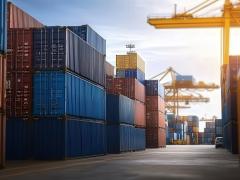
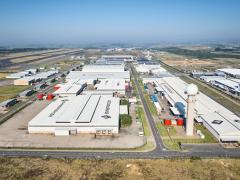
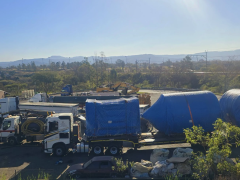
The transport of high-value copper concentrate, anodes and blisters has been shifted from road to rail for both security reasons and because the rail links have improved, says Chris Chipimo, operations director of Bridge Shipping in Ndola. “Around 80% of exports of copper now go by rail – either containerised or in covered wagons,” he says. This is a 180 degree shift, as previously about 80% of the cargo travelled by road. Rail through to Richards Bay, Durban and Dar es Salaam “has become very competitive,” he says. Cargo shipped from the mines in Zambia and the Democratic Republic of Congo in open rail wagons is transhipped from open to covered wagons and containers at the secure Bridge Shipping yard in Ndola. In addition to the standard 24-hour armed security, the compound also houses police quarters. Bridge Shipping is also one of the companies helping to start up the export of manganese from the Copperbelt via road and rail. Because manganese ore has relatively low value, it is not a target for theft, and many truckers prefer to carry it, says Chipimo. However, because it is a low-cost commodity, there is extreme pressure on the costs of transporting the manganese. Until the world price rises, the region is not expected to become a major supplier of manganese as it cannot compete against mines which have more cost-effective links to the sea. Bridge Shipping Zambia does not just limit itself to the precincts of the Copperbelt. Bridge Shipping Lusaka is tremendously active with agricultural movements of commodities such as tobacco, sugar, soya beans and wheat, says Chipimo. To complete this logistical chain, Bridge Shipping also offers a complete service whether by air, sea or road freight and has a specialised over-border department for northbound cargoes to ensure that the road freight rates are kept to exceptionally competitive marketrelated prices, he added.
High-value cargo switches back to rail
Comments | 0
© Now Media. This content is protected by copyright and may not be adapted or republished. If you would like to discuss cooperation opportunities, please contact: editor@freightnews.co.za.