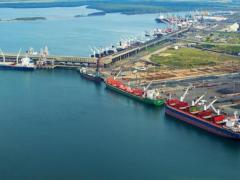
High logistics costs and duties give local auto component suppliers the edge over imports, according to Nissan SA senior general manager of purchasing, Dave Cameron. Speaking at a media round table recently, Cameron said: “In financial year 2007, we spent a total of approximately R2.2-billion, of which R1-billion was on parts, the same amount on services, support and capital, and R200 million on materials.” About 40% of the spend was allocated to its 120 local suppliers around the country. “If we are able to increase the local content to an average 60%, then we are effectively upping our allocation for local business by R500 million,” he said. For the freight industry, this would represent a swing away from international shipping to local transport. With supplier parks being set up alongside plants like Volkswagen in Uitenhage, there are further savings on logistics – at the cost of service providers. Imports of high-value components are, however, likely to continue. Full localisation, although both “feasible and preferable,” is currently “unlikely, given the cost-effectiveness of importing, rather than manufacturing locally, large volumes of engines and transmissions”. In terms of quality, cost and delivery (QCD) Cameron says that South African suppliers have demonstrated their capability. The challenge for suppliers is to remain globally competitive, referring to the threat from low cost countries (LCCs) like Indonesia, Taiwan and Thailand. “If we can compare favourably to a factory gate price in Thailand, Indonesia or Japan then we know we can proceed with the sourcing of parts from a locally based supplier. “It’s not a question of hoping to survive, but of putting appropriate plans in place to ensure immediate survival as well as a state of readiness as and when the turnaround happens,” says Cameron, currently on a three-year secondment from Nissan Europe.
High logistics costs favour local suppliers
Comments | 0
© Now Media. This content is protected by copyright and may not be adapted or republished. If you would like to discuss cooperation opportunities, please contact: editor@freightnews.co.za.