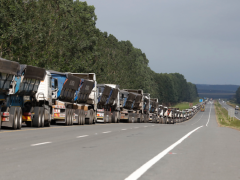
ALTHOUGH ROAD transport now moves about 80% of the cross-border freight traffic between SA and neighbouring countries in the Southern African Development Community (SADC) and Comesa (Common Market for East and Southern Africa) region, border post delays are throttling industry efficiency. “Inefficiency, both at an infrastructural and bureaucratic level, is beginning to manifest itself with greater frequency,” said Mike Scott, Cargo Carriers trading director and chairman of the Federation of East and Southern African Road Transport Associations (Fesarta). Battling this problem is part of Fesarta’s portfolio, where it is working closely with the SADC countries, USAID and the World Bank Sub-Saharan African Transport Policy Programme (SSATP), to improve road efficiencies related to intra-Africa trade, according to executive officer, Barney Curtis. The chief cause of congestion is due largely to bureaucracy, he told FTW, with borders a major cause of delays. “Beit Bridge and Chirundu are the busiest and worst for delays,” said Curtis, “where consolidated loads fare worst, with delays of 2-3 days, while tankers and refrigerated vehicles (reefers) fare best with delays usually less than a day. Kazungula border is now also causing significant delays. “But the pilot one-stop border post at Chirundu is scheduled to be launched in June this year – and others are testing the waters. This major step forward in regional trade facilitation should cut the transit time through Chirundu by 40%.” Similar thinking needs to be adopted at Beit Bridge, described as the main culprit, and as a “bureaucratic bottleneck”. This border crossing links the SADC's harbour-rich SA with Zimbabwe, northern Mozambique, Zambia, Malawi and the DRC to the north – and SA is a main supply point for goods heading north. In a day, approximately 250 commercial vehicles pass through this border post. (It was up to 400 vehicles per day when the Zimbabwean economy was in full swing). “The chief cause of congestion is due largely to bureaucracy,” Scott said, “in the form of the enormous amounts of administration required, a shortage of staff and budgetary constraints. “The bottlenecks also put pressure on inadequate facilities for hosting drivers – who are sometimes delayed for up to three days waiting for final clearances.” Fesarta’s thinking is that, in addition to the various existing initiatives to improve transit times, an attempt to resolve this problem should include creating a one-stop border post at Beit Bridge soon after the goal is achieved at Chirundu. The private sector is also encouraged to make more use of electronic technology and to pre-clear. “The possibility exists for pre-clearance on both sides of the border,” said Scott, “meaning the goods can be cleared through customs and duties paid (if necessary), before the vehicle even arrives at the border.” If these changes were implemented, he added, it could improve SA's logistical operations and make a very tempting offer to international clients. “As it stands,” he said, “activities related to logistics account for some 15.2% of SA's annual gross domestic product (GDP) – so efficient logistics is crucial.”
High level lobby battles bureaucratic bottlenecks
Comments | 0
© Now Media. This content is protected by copyright and may not be adapted or republished. If you would like to discuss cooperation opportunities, please contact: editor@freightnews.co.za.