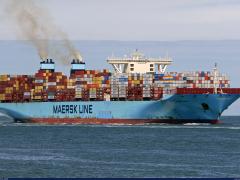
IF YOU have a ship arrested in Cape Town and receive bank guaranteed security from the ship owner against its release, how long can you wait until you take the defendant to court about your claim? Well, certainly not more than 10 years, according to a recent admiralty decision of the SA High Court (Cape Division) – especially when the action would now be “at great expense” and the original claim “appeared to be doomed to fail”, according to the judge. This was one of the results of the case between Zeba Maritime Company as claimant, and Golden International Navigation, the ship owner, as defendant. And it makes for an interesting court precedent, according to lawyer Jeremy Prain, senior associate at Cape Town-based Bowman Gilfillan. “The court provided useful guidelines to determine when proceedings should be struck out under Admiralty Rule 20 (1),” he told FTW, “on the grounds that that they are “vexatious or an abuse of the process of court”.” The story started on March 14, 1997, when the vessel, the MV Visfliet, was arrested “in rem” over the issue of an alleged nonpayment of bunker charges. “Having received security against the release of the vessel,” said Prain, “the claimant took no further steps after close of pleadings for a period of 10 years – and not until the defendant made attempts in 2006 to set a trial date. “This was met with opposition by the claimant, which prompted the defendant to bring a substantive application to have the claim struck out.” In considering this, the court examined amongst other things whether the claimant had given credible reasons for the delay. “On the facts,” said Prain, “it was undisputed that during the entire period between 2001 and 2006 the claimant did not set the matter down for trial – nor did it take any further steps to bring the matter to finality.” Its only explanation for this inactivity was that it was unable toadvance the action due to “administrative funding problems”, according to the claimant. “But,” Prain added, “the court found this to be wholly unacceptable, and said that it prejudiced the fundamental principle of the public’s interest to prompt finalisation or determination of litigation.” It also decided that the delay on the part of the claimant was unreasonable and should not be condoned – the action was struck out, and the letter of undertaking (LOU) was ordered to be returned to the defendant. “While the outcome of all cases depends on their particular facts,” Prain told FTW, “this decision will be welcomed by ship owner defendants and providers of LOUs or similar guarantees. “Moreover, it ought to serve as a clear warning to arresting creditors who – comforted by an undertaking or guarantee – unreasonably delay the prosecution of their claim in SA proceedings.”
High Court decision provides ship arrest guidelines
Comments | 0
© Now Media. This content is protected by copyright and may not be adapted or republished. If you would like to discuss cooperation opportunities, please contact: editor@freightnews.co.za.