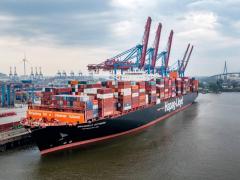
The maritime industry is witnessing a growing disconnect between ship sizes, cargo peaks and port capabilities, according to TOC Americas.
It is a global problem, but one that is increasingly acute both in North and Latin America.
For example, US East Coast (USEC) ports have traditionally enjoyed lower costs and higher productivity compared with their West Coast peers. As economies of scale for larger ships are mainly realised on longer voyages, one might assume that the scene is set for USEC ports to profit hugely from the Panama Canal’s expansion.
However, not all USEC gateways will be able to receive vessels of much greater size, not least because of restricted fairway and quayside depths. But even those that are likely to see larger vessels calling, improving turn-around times will still be crucial to their securing the long term gains.
New infrastructure is part of the answer, but lead times are long, and, as certain ports have found, sometimes intensely controversial and difficult to implement.
However, trade won’t wait, and so the port and terminal community needs to learn now how to make a difference, as well as planning for the longer term. Ports and supply chain stakeholders can no longer think it is “business as usual, just bigger”.
New responses to long-standing challenges of improving performance are urgently needed. These include a fresh approach to the historically fragmented relationship between the many different parties that come together inside the port space, and along the landside supply chain.
These challenges, and potential solutions, will be debated throughout this year’s 15th TOC Americas. But in particular they will be the highlight during a special panel session on Day 2 entitled “Big Ships, Port Productivity & Congestion - Moving the Needle”.