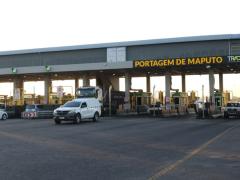
Mozambique remains top of the agenda for Grindrod which plans to invest in the expansion of the Maputo coal terminal. According to Alan Olivier, CEO of Grindrod Limited, the company’s continued investment in infrastructure and equipment in the Port of Maputo is making a significant contribution toward the growth of the port. “Maputo is close to South Africa’s coalfields of Mpumalanga and the huge market that is Gauteng, and is an ideal export corridor to ship commodities to developing markets,” he said. The recent expansion (phase 3) of Grindrod’s coal terminal in Maputo (Terminal de Carvão da Matola – TCM) has increased the terminal’s capacity to 6 million tons (mt) per annum. The operational capability includes the ability to discharge 50-wagon trains in less than four hours, a stockpile capacity in excess of 400 000 tons, a guaranteed minimum vessel loading rate of 15 000 tons per day, and two shiploaders capable of loading simultaneously. According to Olivier, in mid-2011 TCM was receiving rail throughput of coal and magnetite of approximately 320 000 tonnes per month, up from 2010 when an average of 150 000 tonnes per month was received. “This improved rail capacity is mainly due to a vast reduction in the turnaround times of the existing rail resources on the Maputo corridor,” he said. “Coal wagons to TCM, for example, have improved from an eight-day cycle to less than five days. The current phase of the Transnet Freight Rail ramp-up plan from South Africa is targeting 35 x 40-wagon coal trains and 10 x 60-wagon magnetite trains per week. This translates into a combined 450 000 tonnes per month. The final phase of the ramp-up, planned for the latter part of this year, will take the terminal up to its 6 million tons annual design capacity.” Olivier said Phase 4, which could expand capacity from the current 6 million tons to more than 20 million tons, is already at feasibility stage. “This future phase of expansion may be in a single- or two-phased approach but will require excavation and land reclamation, the construction of two new berths, a stockyard, and railway infrastructure. The final terminal footprint will be in the region of 120 hectares (excluding any reclaimed areas). “We believe that the demand to move cargo through the coal terminal will continue to grow and we are gearing up to accommodate this increased demand for capacity from both established and junior miners.”
Grindrod stokes up expansion at Maputo
Comments | 0
© Now Media. This content is protected by copyright and may not be adapted or republished. If you would like to discuss cooperation opportunities, please contact: editor@freightnews.co.za.