Government’s Operation
Phakisa – designed to unlock
the economic potential of South
Africa’s oceans – is getting
more bite, as major investments
are being announced.
When it was officially
launched in October last year,
the initiative was only defined
in general terms, with the four
areas of focus being marine
transport and manufacturing;
offshore oil and gas exploration;
aquaculture; and marine
protection services and ocean
governance.
But a more detailed picture
was revealed to FTW by
Trudie Nichols, a partner at
maritime specialist lawyers,
Bowman Gilfillan.
She told FTW that the public
sector plans for unlocking the
economic potential in marine
transport and manufacturing
included:
• Establishing a purposebuilt
oil and gas port
infrastructure at
Saldanha Bay and other
ports;
• Maintaining and
refurbishing existing
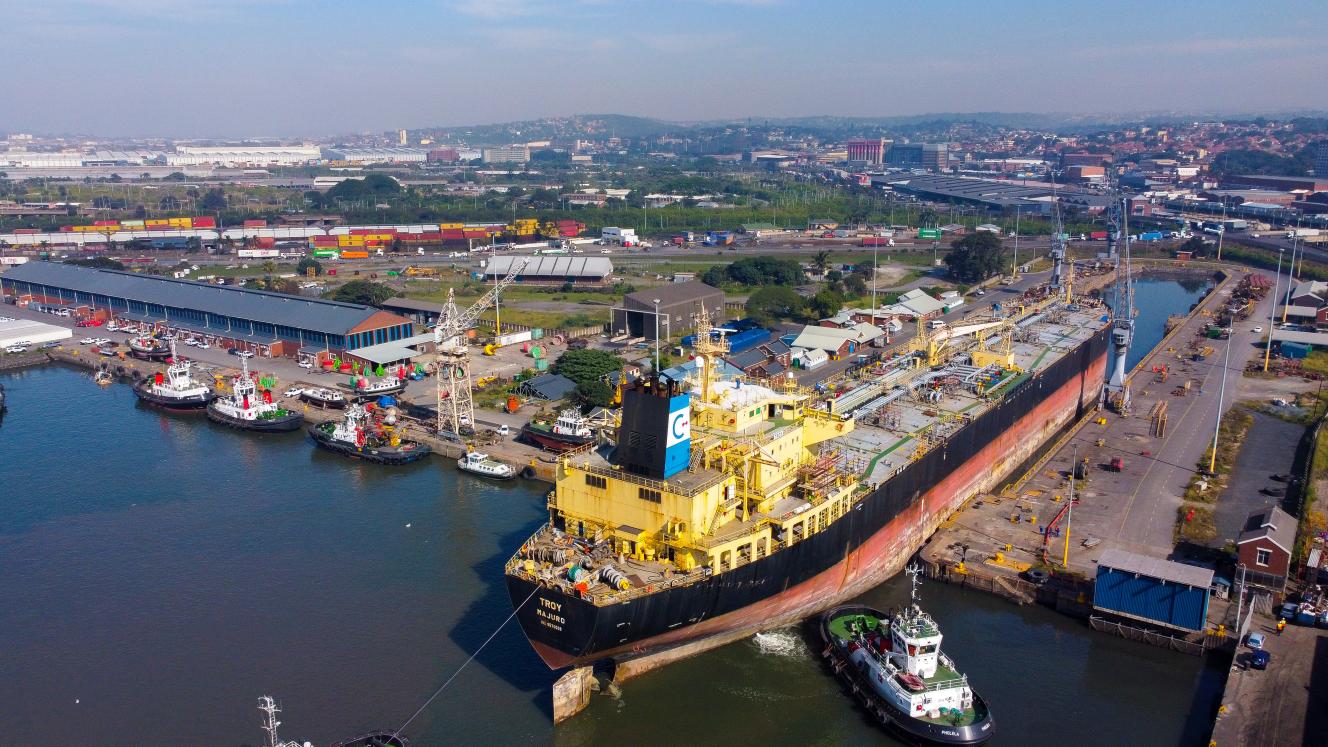
port and ship repair
facilities;
• Fast-tracking decisions
on issuing of licences;
• Reforming the port
tariff structure to
incentivise export of
value-added/processed
goods;
• Designation of port
facilities for boat, ship
repair and rig repair
with localisation;
• Establishing a
supporting funding
model for infrastructure
development in ports;
and;
• Increasing capacity
for storage and
warehousing.
Nichols pointed out that
the proclamation of new
ports in the Northern Cape,
Eastern Cape and KwaZulu-
Natal and plans to establish a
Small Harbours Development
Authority, appeared to be
mostly aimed at aquaculture
“It is initiating the
implementation of 24
prioritised aquaculture
projects,” she told FTW. “It had
a focus on 12 proclaimed small
harbours to be functional by
June this year, and initiating
the process to proclaim 28 new
harbours by mid-2016.”
And, according to the
department of transport,
a total of R410 million has
already been invested by the
private and public sectors in 10
such projects.
Another individual
development is to expand
the domestic shipbuilding
sector and the development
of Saldanha Bay as an oil and
gas hub.
“In this latter development
at least R9.2 billion will be
spent,” said Nichols, “and the
phased gas pipeline routes
have also been defined.”
The public sector
contribution will include the
construction of a new deepwater,
oil rig repair facility
at a new berth with a water
depth of -21 metres. And
there will be the lengthening
of the Mossgas Quay by
500m and a water depth
of -8.5m for repairs and
maintenance to rigs and
supply vessels not requiring
deep water. Pockets of
water depths of -12m will
accommodate floating docks
to enable these types of
repairs.
The development of the
general maintenance quay
– with a berth length of
280m and a water depth of
-8.5m – will see it acting as
an offshore oil and gas supply
base.
Nichols also described
other port initiatives.
“The Port of Richard’s Bay
will pursue the establishment
of a vessel repair facility,
utilising the existing repair
quay or potential new sites to
facilitate vessel repairs.
And Nichols added that
the Port of East London
would pursue a boat building
project. The refurbishment of
the slipway and backup area
as a boat building hub had
been identified.
According to Zuma,
the finalisation of the
Minerals and Petroleum
Development Amendment
Bill was designed to assist in
accelerating offshore oil and
gas exploration.
“The aspiration of
the offshore oil and gas
exploration focus group of
Operation Phakisa is the
drilling of 30 exploration
wells in 10 years. In their
view, this will produce 370
000 barrels of oil per day,”
he said.
“If this is achieved, it
would contribute an annual
amount of U$2.2 billion
to the gross domestic
product, while reducing
the dependence on oil and
gas imports during the
production phase.”
Government's maritime economic focus gets teeth
Comments | 0
© Now Media. This content is protected by copyright and may not be adapted or republished. If you would like to discuss cooperation opportunities, please contact: editor@freightnews.co.za.