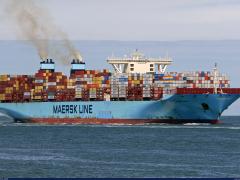
Attractive new shipping provisions in SA’s new Taxation Laws Amendment Bill could help realise government’s dream of more SA-registered or even SA-owned ships. According to Andrew Pike, director of shipping legal specialists Van Velden Pike Incorporated, the provisions go some way to showing that the government is serious about taking steps to revive SA’s rather sleepy international shipping sector. “This is recognition that the SA shipping industry needs to be supported by creating incentives which not only encourage SA ship owners to register their ships in this country, but also to incentivise the business of owning and operating ships and the consideration of a career at sea.” Contrary to the position in the 1980s, there are presently no cargo or passenger vessels of any significance on the SA ship register, which comprises mostly small-scale fishing vessels and research or pleasure craft. “The importance of attracting more vessels to the register lies in the fact that, at present, all freight generated by the ocean carriage of goods and passengers (which amounts to billions of rand each year) leaves SA due to the relevant ships being foreign-owned and registered,” Pike added. Aside from the income which is generated by ports and related cargo and vessel services, this potentially huge source of revenue stemming from freight remains largely untapped, and the SA economy receives no direct benefit. Similarly, because all of these large vessels are flagged in foreign states, there is also obviously no obligation on the ship owners to employ SA citizens as crew. “The key underlying purposes behind increasing the number of large and internationally going cargo and passenger vessels on the SA register are to prevent the outflows of freight and passenger fares, to bolster the SA maritime industry in general, and to create jobs for local seafarers,” said Pike. The reality, he added, is that, presently, many foreign states offer comparatively attractive shipping tax regimes, where associated taxes are either exempted altogether or significantly reduced so as to discourage ship owners from migrating to other registers. Conversely, the current tax regime subjects all SA companies to an income tax rate of 28% – and no real incentives exist to make our shipping sector truly competitive. Pike pointed out to FTW what he considers right about the bill. The new bill proposes introducing the following provisions, which apply to SA ships involved in international shipping: * Exemptions from normal tax, capital gains tax and dividends tax; * Exemptions from withholding tax on interest payable to foreign financial institutions which finance the construction and improvement of SA ships; and * Exemptions from normal tax in respect of all officers and crew employed aboard SA ships involved in international shipping, including SA citizens. But he also noted what he considered wrong with the bill. “While these amendments introduced by the proposed legislation are mostly to be welcomed in keeping with the international trend mentioned above, the glaring exclusion of cabotage or coastal shipping from the new provisions is a concern,” said Pike. “Frankly, it does not seem to make sense for cabotage activities to be excluded. This is especially because there are no ships on an SA register which is actively trying to attract new tonnage. Realistically speaking (provided the incentives of doing so are sufficient) most ships plying a coastal trade in SA would likely get the ball rolling by being among the first to migrate to the register.” Pike also stressed that the SA Revenue Service (Sars) had nothing to lose by taking the tax exemptions for shipping even further. “Given that the Sars presently earns no revenue from shipping, it would not be forfeiting anything by extending the tax exemptions to all core shipping activities,” he said. “On the other hand, these tax incentives could attract more ships to the register and boost industries such as the ship repair and ship building industry – from which Sars does in fact earn revenue.” There is another important consideration. This is that ships which are mainly used for the coastal trade in SA do from time to time make international voyages to neighbouring countries, such as Mozambique. “If just a single international voyage were to be made in a tax year that ship would qualify for the relevant exemptions in the bill as drafted,” said Pike. “There would only be the additional administrative burden of separating income derived from international trade from that derived by a ship in coastal trade when that ship is involved in both types of trading.” The proposed Act will come into operation on January 1 next year, and will be effective for years of assessment beginning on or after that date.
Government takes action to revive SA shipping sector
Comments | 0
© Now Media. This content is protected by copyright and may not be adapted or republished. If you would like to discuss cooperation opportunities, please contact: editor@freightnews.co.za.