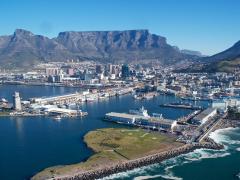
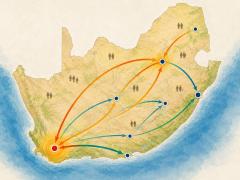
Government has identified the important role played by logistics in economic development and job creation. Economic Development minister Ebrahim Patel in his “New Economic Growth Path” says “addressing the energy and logistics challenges will prove essential for both overall competitiveness and for overcoming the spatial patterns of apartheid”. Government will be looking at ways of upgrading logistics to support farming, mining, construction, manufacturing and tourism, he said. Patel admits that “bottlenecks in logistics, energy infrastructure and skills” have “raised costs across the economy”. He reiterated government’s commitment to rail: “Greater emphasis will be placed on the expansion of rail transport, with more railway tracks and rolling stock, given the cost and logistics advantages for both commuters and freight transport,” he told the Parliamentary Portfolio Committee. There will also be a focus on connectivity, promised Patel: “Communications provides the backbone for a modern economy, and expanding the infrastructure will go together with measures to reduce costs”. Patel’s department is also committed to freeing up trade within the SADC region. “Our proposals centre on a strategy for improving logistics, with clear priorities and timeframes, including a ‘smart ports’ network that integrates a common systems, people and technology platform across a number of countries to improve port efficiencies and costs. This will be explored initially on a pilot basis with five key ports on the continent. The proposal also focuses on an integrated road and rail system across the continent; measures to expand regional investment and trade and develop integrated supply chains and industrial corridors particularly in mining and agroprocessing; and reducing regulatory obstacles to trade and travel,” he said.
Government proposes regional ‘smart ports’ strategy
Comments | 0
© Now Media. This content is protected by copyright and may not be adapted or republished. If you would like to discuss cooperation opportunities, please contact: editor@freightnews.co.za.