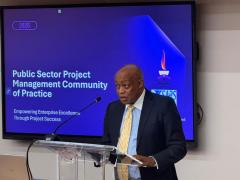
REDUCING CARBON emissions must be seen as a collective industry imperative. That was the central message at the Chartered Institute of Logistics and Transport’s (Ciltsa’s) inaugural ‘How green is your supply chain?’ conference in Muldersdrift last week. And while many local companies are concerned about losing their competitive advantage by sharing information, spokesmen for large multi-nationals such as Engen, Volvo and Boeing said that they were working together with their suppliers and competitors to address environmental concerns. South Africa is very far behind the rest of the world when it comes to environmental considerations. We have the eighteenth largest global economy based on GDP growth but the fourth highest emissions of carbon (CO2) in the world, says Irma Loots, manager systems and services standards at the SABS. To make the single biggest impact on the environment the focus should be on reducing CO2 emissions as opposed to other greenhouse gases as it has the greatest effect in both time and space, its spread is global and its lifecycle spans centuries, explains Rudolph Louw, executive director of Boeing International." Lan Situma, project manager of the national transport master plan at the Department of Transport (DoT), puts the green issue in perspective. “Up to now we have done all our planning in silos. We need to start on a wider, macro level and not just focus on transport. We already have 84 acts, making transport the most regulated industry in the country. We do not need more legislation but rather clear forward planning and implementation that includes all the stakeholders. " This sentiment was echoed by Zakhele Mdlalosa, director: environment for the Department of Trade and Industry (dti). He says each of us should ask ourselves how we can contribute to issues as applied to the value chain locally, regionally and globally. Change must start at the planning stage of plants and end with a change of heart on how we consume.
‘Going green’ demands collective responsibility
Comments | 0
© Now Media. This content is protected by copyright and may not be adapted or republished. If you would like to discuss cooperation opportunities, please contact: editor@freightnews.co.za.