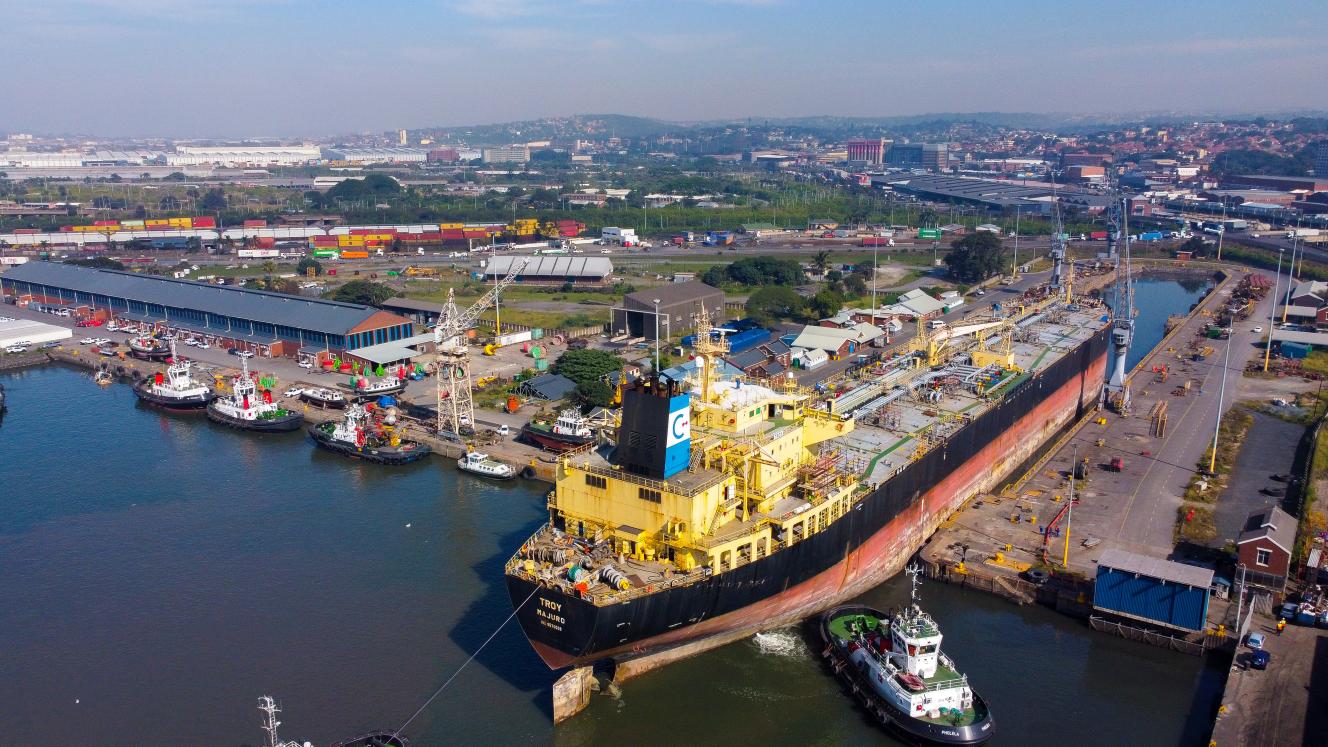
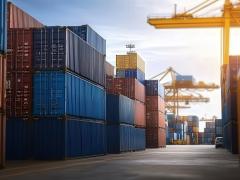
The rate at which SA Revenue Service (Sars) officials and SAPS Protection and Security Service (PSS) officers are stopping (“selecting”) is the term they use) containers at the Port of Durban has increased significantly in the past year. And this fact has met with two completely opposite reactions as FTW went out to gather comments from port users. Expressing the traditional forwarder’s moan about release delays and extra – and sometimes irrecoverable – costs was Kas Naidoo, operations manager of Africa Logistic Services. “For the past six months we’ve been inundated with customs stops and border police (now Protection and Security Services ) stops,” he said. “It takes a long time processing the reports, and is costing importers a lot for depot storage and unpacking. “The process is too cumbersome, and bad for us when importers refuse to pay the extra storage costs.” Naidoo insisted that he did not object to the principle of stopping containers for customs checks. “That’s them doing their job,” he told FTW. “But they’re just too slow, and depots are waiting a long time for customs officers to come and check a large number of containers.” This stop rate has been a recent subject of discussion between Sars management and the SA Association of Freight Forwarders (Saaff), according to Dave Watts, Saaff maritime affairs adviser. But, although he agreed that container stops had certainly been significantly increasing in the last year, he saw it as a sign of increased efficiency at customs. “Sars has introduced a very sophisticated risk management system in the past year,” he told FTW. “In brief, this system addresses a whole host of facts and figures related to each shipment, and automatically ‘f lags’ the likely suspects of non-compliance. “This tells them which are the likely candidates, and which need human intervention to check them out.” Selecting from his considerable collection of statistical numbers Watts pointed out that, in the second quarter of this year (April to end-June), customs’ risk management system had electronically checked the data for a total of 520 000 import shipments countrywide. Of this, 51 000 shipments had been f lagged as possibly non-compliant. Of the selections made in that three-month period, some 26% of imports were found to be non-compliant, while 37% of exports were identified as non-compliant.” Non compliant can mean anything from contraband to technical errors. “Look at it the other way,” he said, “and this shows that well over 90% of shipments coming into the country were not f lagged by the management system as being at a high risk of non-compliance.” There’s an even more significant number of export shipments which get a f lag-rating. “It’s not like the old days,” said Watts, “when absolutely all the export boxes went though without a look. “Now, however, with almost all imports and exports being electronically examined and cleared, the customs system processed a total of 300 000 export consignments in that second quarter, and 100 000 were identified for further checking.” To give a measure of the success rate of the system, Watts chose available figures for the first half of this year. “During that time,” he said, “a total of 2 422 shipments were seized – with a total cargo value of R374-million. “Of these, over 850 were incoming shipments of contraband cigarettes valued at R90-million. Just short of 1 000 were shipments of counterfeit goods valued at some R200-m. “Watts is sure that there will continue to be a high number of customs stops. “But that’s because they are being more efficient and successful at their task of combating illegal imports and exports.” He added that we can expect ongoing increases in the amount of selections by Customs and ad hoc “stops” by PSS but both parties need to ensure that delays to “innocent” cargo are kept to a minimum.
‘Get used to an increase in Customs stops’
Comments | 0
© Now Media. This content is protected by copyright and may not be adapted or republished. If you would like to discuss cooperation opportunities, please contact: editor@freightnews.co.za.