Gauteng residents need to change their mindsets on e-tolling, roads and transport MEC, Ismail Vadi, said.
In an interview with News24, Vadi said new highways needed to be built. The question was how this would be done.
"I can tell you, if you take Gauteng Freeway Improvement Project phase two, phase three, phase four, the ballpark figure at current cost is probably R120bn," he says.
"You want to build phase two, it's a new highway. The PWV 9, PWV 5, the N18, N16, we've got to complete the N17 because it ends at Eloff Street, we’ve still got to get a flyover over the M1. If we want to build these new highways, government estimates are R120bn. My budget is R6.6bn. Where do you start? You're just not going to achieve it."
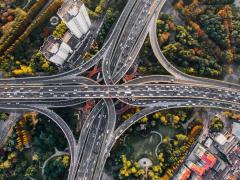
Freeways are critical for freight movement and economic development, with studies around the world showing a public transport system and road network stimulate economic development.
"We might not see it in the first two, three to four years, but you see it in later years. If we have to build these highways, how? We [have] got to get the money and how do you get the money? Your budget allocation is what it is," Vadi said.
His department's R6.6bn was not only for roads and was "nearly not enough to maintain the current road network".
Over R1bn was allocated to the Gautrain, and other portions were allocated to public transport, building taxi ranks, inter-modal facilities, and learner and driver testing centres, among other budgetary needs.
"So roads itself gets about R1.5bn, R2bn at most. I can't then proceed with a R2bn budget to build a new highway. So either we just defer it, we leave it, and say 'well, another generation or another administration can deal with it' or you look for private sector participation," Vadi said.
"Sanral [SA National Roads Agency Limited] has got a model. They sell their bonds. It has done exceptionally well for the last 14 years. They've got a total contribution of I think R52bn over the last 14 years, which government did not have. So they've got a funding model, a financing model which is workable, but of course it is linked to a tolling strategy."
While the public has opposed tolling, the question remains, what other funding options are on the table to finance new highway construction.
"The fuel levy, it's still the public that's paying. The thing about this, whatever mechanism you use to generate revenue, in the end, it's the public that's paying. We can increase the fuel levy, it's not going to solve the problem. You're still paying for it. With increases in the fuel price, it is becoming burdensome," Vadi said.
"My colleagues, the other MECs in the other provinces, ANC colleagues, they are saying, 'But Vadi, you can't increase the fuel levy and tax all of our people, and then go build a highway in Gauteng. It's not on. Come and look at our roads, come and look at our needs, we also have to build roads'."
You could not have a general national tax and then channel those funds into building a freeway in Gauteng, as it is not equitable and fair, said Vadi.
"They [the other transport MECs] say politically we are not going to support that. We are telling you upfront," said Vadi.
"We are going to have to find another mechanism. So those who advocate the fuel levy as the only option, like the opposition parties, they must see whether the rest of the country supports it.
"Our indications are that there's a lot of opposition to that idea of people being taxed in another province and then that money comes to road upgrades in Gauteng. There's no support for it."
On May 20, Deputy President Cyril Ramaphosa announced e-toll tariffs had virtually been halved, from the charge per kilometre, to the monthly cap per a vehicle type.
Vadi said the announcement was a step forward, though it would not satisfy everybody.
One view was people wanted the roads upgraded, and since they paid taxes, they wanted government to build infrastructure for free. Another view was that the roads should almost be fully privatised.
"I think we are taking the middle road between the two. The announcement that has been made by the Deputy President does allow us to break the log-jam in some way and I think to try and build middle ground," Vadi said.
"At the end of the day, funding and financing road infrastructure development, that's really the key issue."
Source: http://www.fin24.com/Economy/Gautengers-urged-to-change-mindset-on-e-to…
Gautengers urged to change mindset on e-tolls
Comments | 0
© Now Media. This content is protected by copyright and may not be adapted or republished. If you would like to discuss cooperation opportunities, please contact: editor@freightnews.co.za.