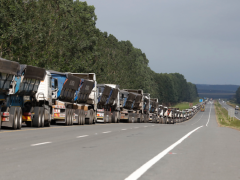
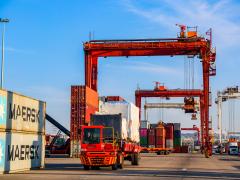
In August this year American President Barack Obama committed to investing $14 billion to boost intra-Africa trade. Liesl Venter quizzed industry specialists to find out more about what role Gauteng can play in realising this objective. FTW: How can Gauteng entrench itself as a gateway into southern Africa in the future and what does it need to do to ensure it has a competitive advantage? Cobus Rossouw, chief business development officer, Imperial Logistics: The effective consolidation in Gauteng of products destined for southern African markets provides a great supply chain opportunity. This could include products produced in South Africa as well as products imported from international sources. Competitive advantage will follow from establishing an integrated solution that considers effective demand management, multi-principal synergies and transparent international trade management. The challenge is to mature from the current opportunistic exports into southern African countries towards an integrated valuechain approach where the development of consumer demand in these markets is supported through sustainable supply chains. Jim Campbell – independent technical and management consultant in Road Transport: Gauteng is already a gateway to southern Africa and is central to the movement of goods and products on both northern and southern transport corridors between SA ports and our regional neighbours, as far north as central Africa. Though comprising only around 1.5% of the country’s land area, Gauteng generates more than one third of the country’s economy and is also the centre of some of the country’s major industrial activities, including steel production, high-tech products and a number of major vehicle assembly and manufacturing facilities. FTW: What are the major challenges facing Gauteng when it comes to being a leading regional hub? CR: The current multi-modal infrastructure is inadequate, which means that inter-regional trade depends largely on road logistics. More importantly, the imbalance in product f lows into and out of markets results in logistics inefficiencies. Cross-border trade remains constrained by administrative difficulties, which is resulting in East-West corridors becoming more attractive for international trade. JC: The province is landlocked and does not sit on a major waterway as do some major transport hubs in other countries, although it does have SA’s major international airport and has an important inland container port. As a consequence the region is dependent on existing road and rail networks for the movement of goods through it, and also for inbound and outbound transport, although these networks are fast reaching their capacity limits. FTW: How can Gauteng stop itself from losing the logistics lead that it currently has? CR: Gauteng has to retain the capability to import products seamlessly, which requires either the maintenance of inland port status or changes to customs regulations. Investment is required in consolidation facilities and road infrastructure should be upgraded as volume f low increases. JC: The proposed new highspeed rail link mooted by Transet between Johannesburg and the coast is essential to avoid future restrictions on increasing volumes of import/export container traffic. Currently the road transport sector carries more than 80% of the goods transported but government plans include a strong commitment to transferring some of this to rail. However, the reality is that there are limits to how much of the goods traffic can be transported by rail. And while the road freight industry is able to rise to the challenge, the existing road infrastructure may not, and there is a view that more major roads should also be built to accommodate increasing commercial road traffic. FTW: What do you think the opportunities are for the province? CR: The opportunity is to leverage the scale from Gauteng production, consolidated with production in other SA regions and imported products, to establish integrated capabilities to serve southern African markets. JC: As the strong foundations of the current Gauteng are based on the establishment of the gold mines and supporting industrial structures well over 100 years ago, the province should be able to retain its lead as the business and industrial hub of the country, notwithstanding the potential infrastructure challenges already mentioned. INSERT & CAPTION 1 The proposed new highspeed rail link mooted by Transet between Johannesburg and the coast is essential to avoid future restrictions on increasing volumes of import/export container traffic. – Jim Campbell INSERT & CAPTION 2 The challenge is to mature from the current opportunistic exports into southern African countries towards an integrated value-chain approach. – Cobus Rossouw
Gauteng plays crucial role in inter-regional trade
Comments | 0
© Now Media. This content is protected by copyright and may not be adapted or republished. If you would like to discuss cooperation opportunities, please contact: editor@freightnews.co.za.