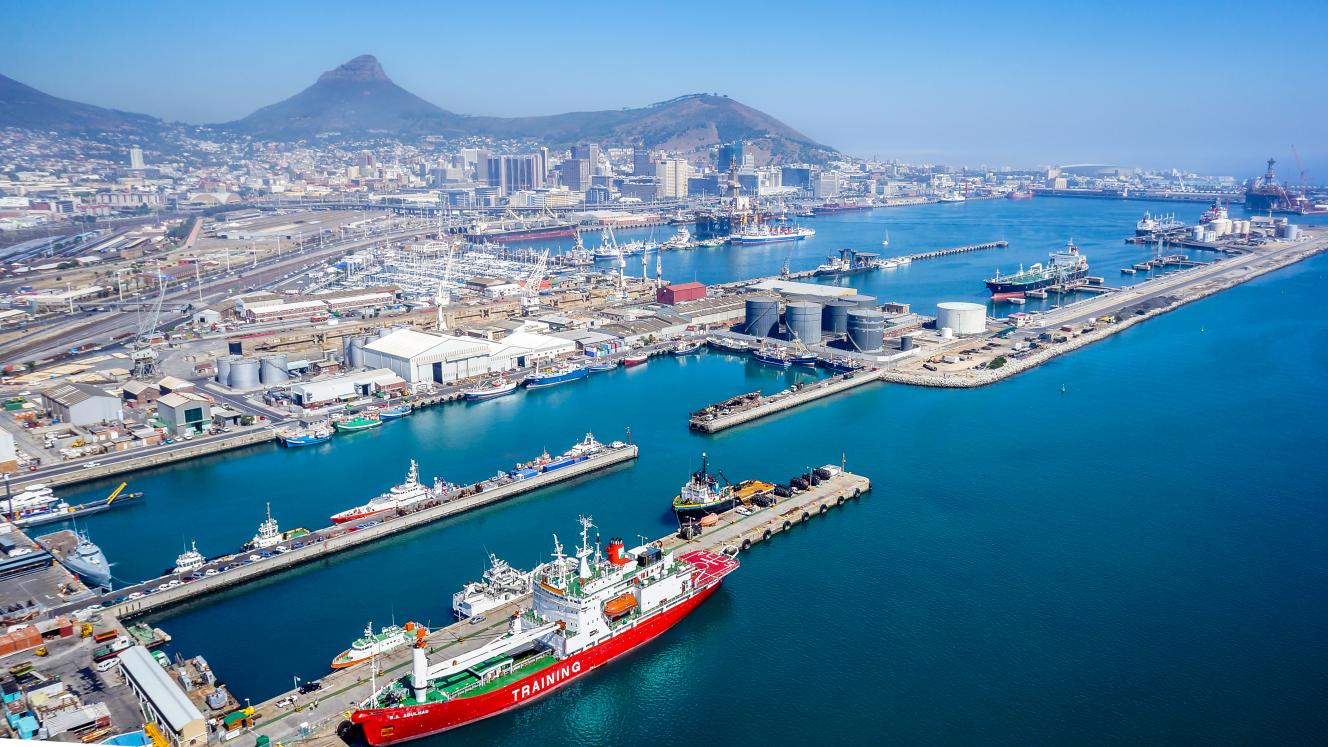
Cargo traffic (apart from breakbulk) through the SA ports system has grown this last financial year despite things tightening in the international trade markets. The 14.8 million tonnes of breakbulk traffic was down 2.3% in the 2011/12 fiscal year on the 15.12 mt of 2010/11. But Durban did not share in the drop, and bettered its market share over its nearest competitors Richards Bay, Port Elizabeth and Saldanha Bay. Its breakbulk traffic climbed by over 5%, to just under 7 mt in 2011/12 from 6.66 mt in 2010/11. But bulk, generally a fairly stable performer, was up by 3.4% – at 189.63 mt compared to 183.45 mt in 2010/11. Of this 78.7 mt (74.9 mt the previous year) was in coal exports through the port of Richards Bay, while 52.95 mt (50.13 mt) was iron ore exports through Saldanha Bay. Containerised cargo, meantime, grew by 6.4% to 4 353 568 TEUs in 2011/12 from 4 090 787 TEUs in 2010/11. But of these, a total of 948 425 TEUs were full boxes shipped deepsea (exports) a dip of 0.74% on the 955 542 TEUs of 2010/11. Imports (full boxes landed), however, grew by 8.9% from 1 260 668 TEUs in 2010/11 to 1 372 598 TEUs in 2011/12. Durban, the main performer, handled a total of 2 698 173 TEUs in 2011/12, up 4.9% on the 2 572 450 TEUs of 2010/11. Of these 1 019 321 TEUs were full deepsea landed (imports), up 9.5% on the 928 786 TEUs of 2010/11. Exports, meantime, dropped by 1.4% to 625 500 TEUs compared to 634 656 TEUs the previous year. “For the national economy the bulk cargo statistics financial year-on-year are more reassuring, with national exports increasing from 135 million tons to 144 mt largely due to high maize exports,” said Dave Watts, maritime adviser to the SA Association of Freight Forwarders (Saaff), “whilst import volumes dropped from 40 mt to 38 mt.” He also suggested that the breakbulk stats supplied by the Transnet National Ports Authority (TNPA) were open to debate. “This,” he said, “as the substantial volume of fully built-up (FBU) vehicles handled is not indicated on a per unit basis, but on the rather arbitrary ‘harbour ton’ basis – which is based on the formula: One metre of length equals two tons. As a result the smaller the car, the less the tonnage. But there would possibly be a higher volume if they were recorded on a per unit basis.” Watts also noted that another impact on breakbulk volumes was the ongoing move to containerisation, both for exports and imports. “And this has been consistently affecting breakbulk volumes negatively,” he said.
Full year stats paint positive cargo picture
Comments | 0