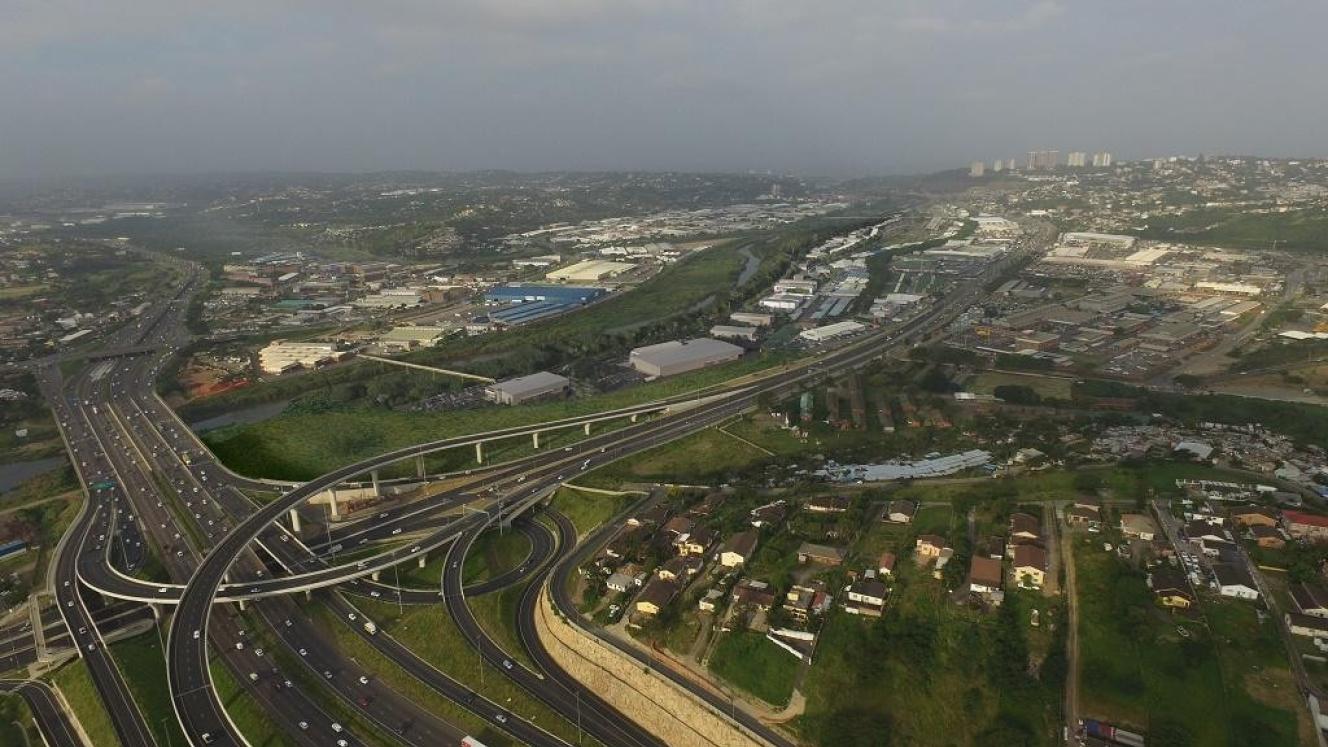
Transport economics adviser at Arup Transport Planning, Andrew Marsay, remains a strong proponent of a freight ‘superhighway’ between Johannesburg and Durban – and he believes that government should be investing in road rather than rail to address the country’s logistics issues. “By segregating freight traffic from passenger traffic you can bring down costs by up to 40%, at the same time generating massive safety benefits by keeping buses and cars separate.” And the economic benefits to the country are huge, in his view. “Even in difficult financial times like now it would make sense for government to create a transport infrastructure investment fund. “The freight highway could be tolled and if the highway could help vehicles reduce their operating costs by 20%, road operators would be able to contribute a good proportion of the cost through the tolls.” But even without the benefit of tolls, the positive economic externalities would justify government investing in the road, says Marsay. And there are several interventions that could mitigate carbon emissions of road transport, a strong argument against the road option. “While there’s no question that road technology is four to five times worse than rail in terms of carbon emissions, that must be seen in the context of the economic value of the whole supply chain, says Marsay, who points to evidence that the very significant environmental cost differential between the two modes is actually only a small proportion of total supply chain cost and should not be allowed to be the sole basis of a decision on infrastructure. “We must follow the total economic picture with our infrastructure investment and start to optimise vehicle manufacture to much higher environmental standards.” Marsay suggests that one could, as a condition for a freight super-highway, insist that only Euro 4 engines – the highest level of technology available in terms of environmental performance – be allowed to use the road. “In this way you would combine the move to road with strong moves to mitigate the environmental externalities of road.” And it’s not a pipe dream, in Marsay’s view. The concept has been explored in the US where there are a number of examples of successful freight highways in the likes of Texas and Pennsylvania. “A particular application of the segregated freight road concept occurs where freight traffic and port access traffic compete for road space as in Durban. The only way to effectively manage port and city traffic into Durban port is to segregate it. “If the case were acknowledged the highway could be completed in 10 years,” he said. A staged approach could be adopted with bypasses of Van Reenen’s Pass and Pietermaritzburg’s Town Hill being good starting points.
Freight superhighway on Jo’burg- Durban route the answer
Comments | 0
© Now Media. This content is protected by copyright and may not be adapted or republished. If you would like to discuss cooperation opportunities, please contact: editor@freightnews.co.za.