Here are four fun facts about the history of shipping compiled by Ernst Packaging Solutions with which you can impress your friends.
• Ceramic containers for food storage and transporting date back for around 8 000 years and were developed in the Middle East. Prior to that, food was primarily eaten where it was cultivated or transferred, albeit poorly, wrapped in animal skins or grasses.
Wooden boxes, barrels and crates came around 3 000 years later. They have even been found holding personal belongings in Egyptian tombs.
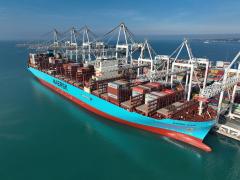
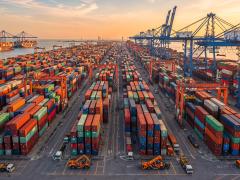
• Shipping containers, specifically the ISBUs (intermodal steel building units) that we know today have been standardised. But, up until the 1970s, shipping, loading and unloading was a horrible mess since each company had its own personal design and system for shipping.
American Malcolm McLean figured there had to be a better way. Over 20 years, he used his knowledge to design the perfect shipping container that was strong, stackable, and theft-resistant and could be transferred between truck and rail with ease. His design was patented in 1956, but it wasn’t a success until the US Navy adopted the shipping containers.
Soon after this, they became a global standard. As a result, freight could be loaded and unloaded faster and by fewer people, reducing the costs by more than 90%.
• When the Apollo 11 astronauts returned from the Moon, even they had to fill out some paperwork for customs and immigration agents.
You see, technically they left the US, and as a result the astronauts had to be officially readmitted through immigration, and the cargo they brought back listed with customs as “imports”.
This led to the task of having to fill out “Moon” as the place of departure and as the cargo source.
In case you were wondering, the cargo was listed as “Moon rock and Moon dust samples”, and import duty was, apparently, waived.
• In 1992 a shipping container bound for the US from Hong Kong fell overboard and was lost at sea. The cargo that it spilled into the ocean was 28 000 plastic duck bath toys.
Those toys have been following ocean currents ever since - reaching every continent but Antarctica, including surviving the Arctic Ocean and moving around North America to reach the British Isles.
Scientists have been using the data collected from ships spotting the yellow tide, or duckies washing ashore, to study ocean patterns and how long it takes for them to navigate the globe.
Four fun facts about shipping
Comments | 0
© Now Media. This content is protected by copyright and may not be adapted or republished. If you would like to discuss cooperation opportunities, please contact: editor@freightnews.co.za.