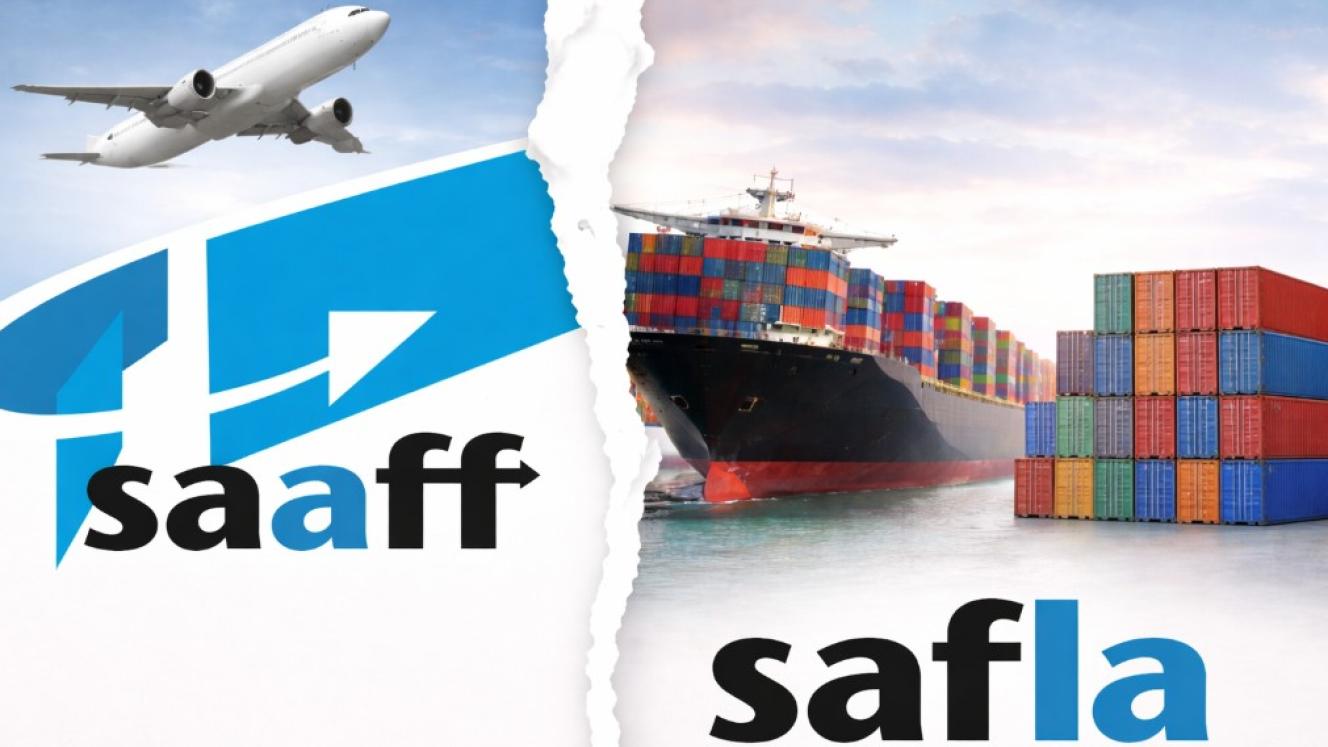
The South African Association of Freight Forwarders (Saaff) has finally broken its silence after last week’s announcement that a new breakaway body is threatening to split the 125-year-old industry organisation.
After Freight News broke the story on Tuesday, March 24, that the South African Freight and Logistics Association had formed as a regional response to the disbanding of the ports' executive committees (Excos), Saaff initially declined to comment.
Saaff CEO Dr Juanita Maree and her media liaison officer, Teresita van Gaalen, were on various occasions approached for comment after it was confirmed that Safla had been formed.
All Maree said was that the truth was being distorted.
It is understood that she disagrees with the contention that disbanding the Excos has resulted in de-regionalisation and that members in the branches (“chapters”) have been stripped of the ability to urgently and immediately intervene with cargo complexities as they unfold.
Ahead of Safla’s breakaway, when Maree was first approached about the matter, she said that centralising control at Saaff’s head office in Johannesburg strengthened the association’s leverage at the government’s National Logistics Crisis Committee (NLCC).
She reiterated her resolve to build a stronger forwarding industry by saying, “we’re building with diligence, passion and love – not breaking and destroying our beloved logistics industry”.
On Friday it emerged that Saaff had circulated external communication, dated March 27, stating: “Saaff notes the announcement of the formation of a new organisation, apparently involving some of our members previously represented on the now disbanded Excos based in the coastal regions.
“It saddens us that these members felt that their needs were no longer accommodated within Saaff, a members’ organisation that has stood the test of time for well over a century.
“This appears to be a response to the structural changes currently being implemented within Saaff. While resistance to change is not unnatural, it is a great pity that these members did not allow these changes to unfold and mature before seemingly making up their minds.”
The statement adds that Saaff is both hopeful and confident “that in the fullness of time these members will see the worth of the changes that are being implemented and that they will return to the fold which we continue to regard as their natural home”.
Regarding its unwillingness to act on its right to reply when the Safla split initially broke, Maree says in the statement: “As a matter of good governance, we do not communicate with our members through the media.”
Maree adds that the current situation, with Safla going on a countrywide drive to canvass members, makes for an “opportune time to recap the rationale for the recent structural changes and to explain how regional representation continues under the current structure.
“These changes are a work in progress and will continue to evolve to meet the needs of our members”.
Safla supporters have cited this as one of the principal reasons for their dissatisfaction with the centralisation at Saaff, as it apparently has regular engagements with government agencies such as the SA Revenue Service (Sars).
Whereas regular meetings used to be scheduled well in advance with Sars to address customs and related issues, not a single meeting has been held between Saaff and the tax authority since the Western Cape Exco was disbanded.
One of the forwarders spearheading Safla, Jonathan McDonald, a former vice-chairman of the Western Cape’s Exco, has confirmed this.
Maree has frequently stated that, given her position on the NLCC, siloed management of the chapters is no longer feasible.
“Saaff’s transition from an association to a non-profit company (NPC) governed by the Companies Act was a deliberate step to strengthen governance, accountability and operational effectiveness.”
Operating as an NPC entails the following goals and advantages, she says:
- Establishes a formal board with clear fiduciary responsibility; we are accountable to our members for how things are run and in compliance with the Companies Act.
- Enables more efficient day-to-day operation and financial management.
- Creates clear lines of authority and accountability, reducing legal and operational risk.
Friday’s Saaff statement says: “Under this structure, the old regional executive committees, ‘elected’ by members having offices in the region, could not remain in place, as they have no legal standing and mandate within the NPC framework and the Companies Act.
“This change was necessary to ensure compliance, protect the organisation and its members, remove any potential preferential treatment and provide consistency in how Saaff operates nationally across the holistic membership base.”
- This is a developing story. More will follow during the rest of the week.